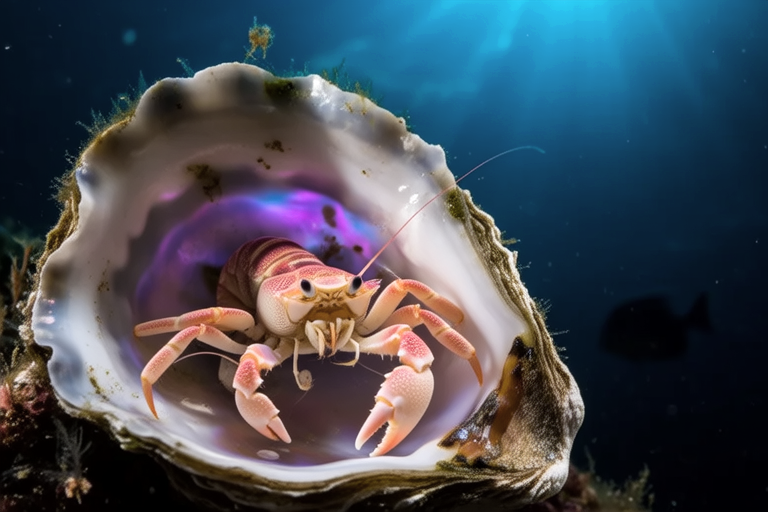
Pea Crabs: The Microscopic Marvels Living Inside Mollusks
Welcome to the fascinating world of pea crabs, a group of crustaceans that have adapted to live within the bodies of mollusks. These tiny creatures, barely reaching one centimeter in length, are remarkable for their unique lifestyle and the intricate relationships they share with their hosts. This article will delve into the world of pea crabs, exploring their size, habitat, symbiotic relationships, and the importance of studying them for understanding marine ecosystems.
The Size and Habitat of Pea Crabs
Pea crabs are some of the smallest crabs in the world, with most species measuring less than one centimeter in length. Their diminutive size allows them to fit snugly within the mantle cavity of their mollusk hosts, which includes various bivalves like clams, oysters, and mussels. These crabs are well-adapted to their cramped living spaces, with flattened bodies and long, flexible legs that enable them to maneuver through the narrow crevices of their hosts’ shells.
Their choice of habitat is not random; pea crabs select mollusks that provide both protection and a steady supply of food. By residing within the gills or other internal structures of their hosts, pea crabs gain access to nutrients and a safe haven from predators. In return, they offer their hosts a form of protection from parasitic infections, as their presence can deter certain parasites from entering the host’s body.
Symbiotic Relationships with Hosts
The relationship between pea crabs and their mollusk hosts is a classic example of mutualism, where both parties benefit from the association. While the crabs enjoy the shelter and food provided by their hosts, the mollusks benefit from the protection against parasites offered by the crabs. Studies have shown that pea crabs consume detritus and microorganisms within the host’s environment, thereby helping to keep it clean and free from harmful pathogens.
This symbiotic relationship is particularly advantageous for both parties because it does not significantly impact the health of the host. Unlike parasitic relationships, where the parasite may cause harm to the host, pea crabs maintain a delicate balance that ensures the survival of both organisms. They achieve this by carefully regulating their consumption of resources and avoiding behaviors that could stress or weaken their hosts.
Diverse Species of Pea Crabs
There are over 100 known species of pea crabs, each adapted to live within specific types of mollusks. For instance, the genus Pinnotheres is commonly found in scallops, while the genus Portlandia prefers oysters. Another genus, Argyrothaca, inhabits mussels, and Paramunida can be found in giant clams. Each species has evolved unique adaptations to thrive within its chosen host, such as specialized mouthparts for feeding on detritus and microorganisms within the host’s body.
One particularly interesting species is the Pinnotheres pisum, which lives inside scallops. These crabs have been observed to move between different scallops as they grow, ensuring they always have a suitable living space. Another notable species is the Portlandia genus, which can be found in both saltwater and freshwater environments, demonstrating the versatility of pea crabs in adapting to different habitats.
Recent Scientific Findings
Recent scientific studies have shed light on the complex behaviors and biology of pea crabs. Researchers have discovered that these tiny creatures exhibit sophisticated mating rituals, with males often guarding females to ensure successful reproduction. Additionally, scientists have identified chemical signals used by pea crabs to communicate with their hosts, indicating a level of interaction more nuanced than previously thought.
Another exciting finding is the discovery of genetic diversity among pea crab populations. Studies have revealed that different populations of pea crabs show distinct genetic markers, suggesting that they have adapted to their specific environments over time. This genetic variation could play a crucial role in their ability to survive and thrive within their hosts, highlighting the importance of studying these tiny creatures for a better understanding of marine ecosystems.
The Importance of Studying Pea Crabs
Studying pea crabs is essential for understanding the broader context of marine ecosystems and symbiosis. These microscopic marvels serve as indicators of environmental health, as changes in their populations can reflect shifts in the overall ecosystem. By monitoring pea crab populations, researchers can gain insights into the effects of climate change, pollution, and other environmental factors on marine life.
Furthermore, the study of pea crabs can provide valuable information about the evolution of symbiotic relationships. As we learn more about how these tiny creatures interact with their hosts, we can better understand the mechanisms that drive the development of mutually beneficial partnerships in nature. This knowledge can be applied to various fields, including medicine, agriculture, and biotechnology, where understanding symbiotic relationships could lead to innovative solutions for human challenges.
In conclusion, pea crabs are truly remarkable creatures that have adapted to live within the bodies of mollusks, forming intricate symbiotic relationships that benefit both parties. Their small size and unique lifestyle make them ideal subjects for studying marine ecosystems and symbiosis. By continuing to explore the world of pea crabs, we can gain valuable insights into the complexities of life in the oceans and beyond.
