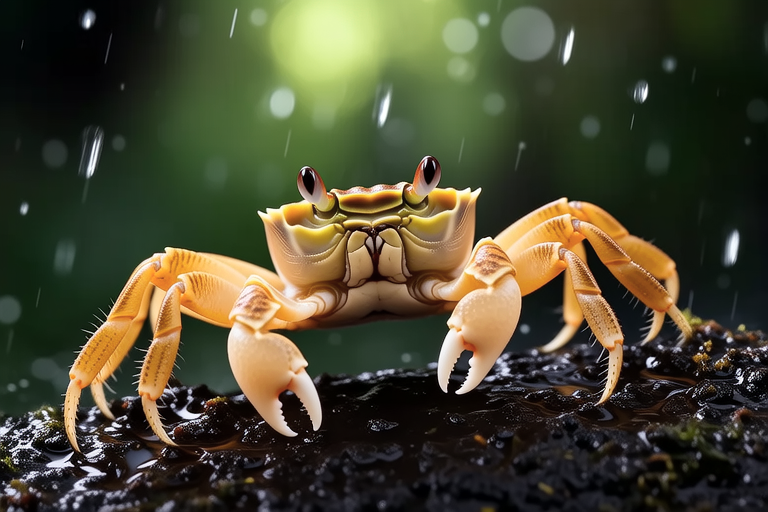
Adorable Yet Unknown: Discovering the World’s Smallest Crab
Welcome to the fascinating world of the world’s smallest crab! This petite crustacean is a marvel of nature, captivating scientists and nature enthusiasts alike. Despite its diminutive size, this crab has a remarkable story to tell. In this article, we will explore the unique features, habitat, behavior, and the challenges this adorable creature faces in its natural environment.
The Unique Features of the World’s Smallest Crab
The world’s smallest crab, known as the pea crab (Pinnotheres pectinatus), truly lives up to its name. As small as a pea, this crab measures less than half an inch in length, making it one of the tiniest crustaceans on Earth. Its body is compact and rounded, with a soft, delicate shell that provides minimal protection from predators. The pea crab’s coloration varies from pale beige to dark brown, allowing it to blend seamlessly into its surroundings. Despite its size, the pea crab possesses all the essential features of a crab, including claws, antennae, and eyes mounted on stalks.
Habitat and Behavior
The pea crab primarily inhabits coastal waters around the world, particularly in areas with seagrass beds and coral reefs. These environments provide ample hiding spots and food sources for the tiny crab. Pea crabs are highly adaptable and can be found in both shallow and deep waters, often residing within the shells of mollusks such as oysters, mussels, and clams. Their symbiotic relationship with these larger organisms offers them protection from predators and access to nutrients. Inside their host, pea crabs can be quite active, moving about and scavenging for food particles.
Pea crabs are known for their unique reproductive habits. Males and females live together inside the same host, where they mate and lay eggs. After hatching, the larvae drift in the water column before settling on a suitable host. Once inside, the juvenile crabs undergo metamorphosis, transforming into the adult form. This process ensures that the next generation of pea crabs continues the cycle of life within their protective shell homes.
Fascinating Facts About the Pea Crab
One of the most intriguing aspects of the pea crab is its ability to coexist peacefully with its host. While it may seem like a parasitic relationship, the pea crab does not harm its host. Instead, it feeds on plankton and detritus, which it filters from the water passing through the host’s gills. This mutualistic relationship benefits both parties, as the crab receives protection and food, while the host gains improved filtration efficiency.
The pea crab’s size also plays a crucial role in its survival. Its tiny stature allows it to navigate through tight spaces and avoid detection by larger predators. Additionally, the crab’s soft exoskeleton makes it difficult for predators to target it as a meal. However, this adaptability comes at a cost, as the pea crab must rely heavily on its host for shelter and protection.
Threats to the Pea Crab
Despite their resilience, pea crabs face several threats in their natural environment. Habitat destruction due to pollution, overfishing, and climate change poses significant risks to their survival. The degradation of seagrass beds and coral reefs reduces the availability of suitable hosts for the crabs, forcing them to compete for limited resources. Additionally, the introduction of invasive species can disrupt the delicate balance of the ecosystem, further endangering the pea crab population.
Pollution, particularly plastic waste and chemical runoff, poses another threat to the pea crab. Plastic debris can entangle and suffocate the tiny crabs, while chemicals can contaminate their food sources and affect their reproductive success. Rising sea temperatures and ocean acidification caused by climate change also impact the pea crab’s ability to thrive. Warmer waters can lead to increased metabolism and energy demands, while acidic conditions can weaken their already fragile shells.
Conservation Efforts and Learning More
To protect the world’s smallest crab and its ecosystem, various conservation efforts are underway. Organizations and researchers are working together to restore and protect seagrass beds and coral reefs, providing safe habitats for the pea crab and its hosts. Public awareness campaigns aim to reduce pollution and promote sustainable fishing practices, ensuring the long-term survival of these tiny creatures.
If you’re interested in learning more about the pea crab, there are several ways to get involved. Many aquariums and marine biology centers offer educational programs and exhibits featuring these adorable crabs. You can also participate in citizen science projects, helping researchers gather data on pea crab populations and their habitats. By supporting conservation organizations and spreading awareness, you can contribute to the preservation of this unique and fascinating species.
In conclusion, the world’s smallest crab, the pea crab, is a remarkable creature with many interesting features and behaviors. From its symbiotic relationship with its host to its ability to thrive in challenging environments, the pea crab is a testament to the wonders of nature. By understanding and appreciating these tiny crustaceans, we can work towards protecting their habitats and ensuring their continued existence for future generations to admire.
