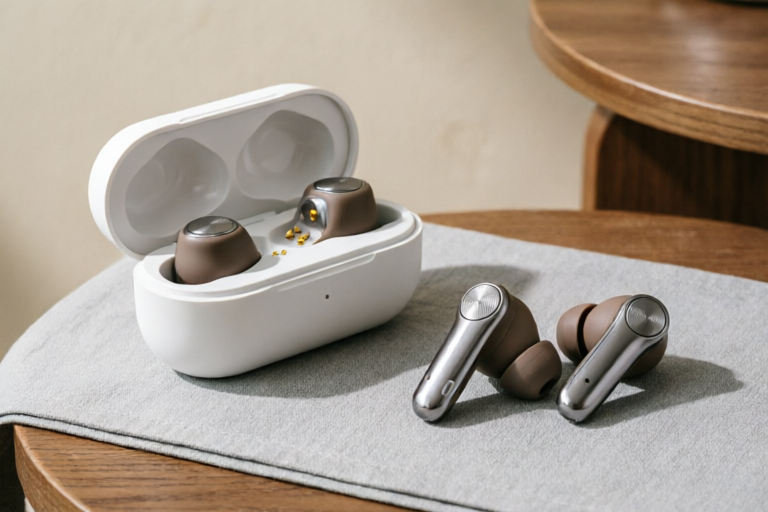
Best Wireless Earbuds for Casual Mobile Gaming Sessions
Sync Your Gameplay, Amplify Your Fun
Introduction to Casual Mobile Gaming Audio Needs
In the rapidly evolving landscape of mobile entertainment, gaming stands out as one of the most immersive experiences available on handheld devices. From hyper-casual puzzle games to complex strategy titles, the graphics and mechanics have reached console-like fidelity. However, for many players, particularly those who identify as casual gamers, the auditory experience is just as critical as the visual display. Unlike audiophiles who chase pristine soundstage reproduction across hundreds of tracks, or competitive esports professionals who demand pinpoint directional accuracy for every footstep, casual mobile gamers occupy a unique middle ground.
The Soul of Immersion vs. Competitive Precision
Casual gaming is defined by accessibility and enjoyment rather than winning streaks or record-breaking times. When you play a rhythm game like Beat Saber or explore the open worlds of Genshin Impact on your smartphone, the background score is meant to elevate your emotional connection to the story. The explosions in PUBG Mobile aren't just noise; they are signals of proximity that add tension. Therefore, the audio requirements here focus on balance, clarity, and mood-setting capabilities. You do not necessarily need a microphone setup designed for Discord calls, nor do you need the extreme isolation required for studio monitoring. Instead, you need a seamless blend of comfort, convenience, and responsiveness.
This distinction is vital because it influences hardware selection significantly. Most consumer-focused TWS (True Wireless Stereo) earbuds prioritize music consumption, often adding heavy bass boosters and reverb that can muddy game effects. For gaming, we need a flat frequency response that preserves detail without sacrificing the punchy lows needed for impact sounds. The challenge lies in finding a pair of earbuds that serve both daily commuters and evening gamers effectively.
Why Audio Matters Even for Casual Players
A common misconception is that audio quality only matters for hardcore enthusiasts. In reality, poor audio execution in casual gaming leads to fatigue and frustration. Imagine trying to locate a hidden chest in a stealth mission while muffled dialogue competes with ambient wind noise. Or attempting to dodge an incoming grenade while your Bluetooth connection drops momentarily due to interference. These micro-interactions define the casual player's satisfaction. Consequently, understanding the specific demands of audio performance—beyond just "it sounds good"—is the first step toward making a smart purchase. We need to look beneath the marketing hype to understand how connectivity and design affect your actual playtime.
Crucial Performance Metrics: Latency and Connection
When transitioning from listening to music to active participation in a dynamic environment like a mobile game, audio becomes time-sensitive. Music allows for milliseconds of delay without you noticing. A gun firing animation synchronized perfectly with the sound makes the action feel responsive. If the audio lags behind the video, the synchronization breaks, leading to a disconnect that feels unnatural and unresponsive. This metric is known as audio latency, and it is arguably the most critical specification for any mobile gaming accessory.
Understanding Audio Latency in Gaming
Latency is measured in milliseconds (ms). For video streaming or movie watching, human perception typically tolerates delays up to 400ms before the lip-sync issue becomes obvious. However, in gaming, especially fast-paced shooters or rhythm games, anything above 60ms starts to feel laggy. High-end gaming headphones wired directly to consoles can achieve under 20ms via proprietary dongles. For wireless Bluetooth earbuds, achieving sub-50ms is challenging due to the compression and transmission protocols involved.
Most standard earbuds operate with a latency of 150ms to 200ms, which is acceptable for movies but jarring for FPS titles where reaction times matter. Fortunately, the market has evolved. Many modern earbuds now feature a specific Gaming Mode. When activated, this mode disables unnecessary audio processing algorithms like Active Noise Cancellation (ANC) transparency boosts, and prioritizes raw throughput. While it may reduce sound quality slightly (often losing some bass richness), the trade-off is a drastic reduction in delay, bringing it closer to 80ms or even lower depending on the chip.
Codec Wars and Bluetooth Versions
Beyond latency, the underlying codec technology dictates how much data is lost during transmission. Standard AAC and SBC codecs are universally supported but offer minimal bandwidth efficiency for compressed audio. The industry shift towards newer standards is crucial here. If you are using an Android device, look for support for LDAC, aptX Adaptive, or specifically aptX Low Latency. On iOS devices, Apple's proprietary protocol ensures tighter integration, meaning AirPods generally offer the lowest latency when paired with iPhones.
Additionally, the Bluetooth version plays a massive role in stability and speed. Bluetooth 5.0 offered a significant jump over 4.2, but 5.2 and 5.3 introduce features designed for low energy and faster reconnection speeds. Lower latency isn't just about the codec; it's also about how quickly the device handshakes when you move in and out of range or switch devices. Some premium brands use multi-point connectivity to allow switching between your phone and tablet, though gaming primarily requires a dedicated connection path to maintain consistent latency without dropping packets.
Stability and Interference
Casual gamers often multitask. You might be playing in the living room while family members watch TV, or outdoors where Wi-Fi routers compete for the 2.4GHz spectrum used by some older Bluetooth implementations. A stable connection ensures that a sudden drop-out doesn't happen during a boss fight. Modern chips utilizing dual-ear transmission and mesh networking help mitigate signal loss. We recommend testing the connection strength in your own environment if possible, as wall density and personal body shielding can sometimes block the signal path between your ears.
Ergonomics and Battery Endurance Factors
Once performance is secured, comfort becomes the deciding factor. Gaming sessions can extend far longer than typical commute walks or workout clips. The difference between a 30-minute session and a three-hour quest marathon comes down entirely to physical tolerance. If the earbuds begin to ache after 45 minutes, no amount of low latency will save the experience. Furthermore, running out of power midway through a campaign is the digital equivalent of the cartridge dying in a 90s Nintendo era game—frustrating and interruptive.
Design Philosophy for Marathon Sessions
The physics of ear anatomy varies wildly from person to person. What fits a small ear canal comfortably might pop out of a larger one. Look for earbuds that come with a variety of silicone tip sizes (XS, S, M, L) or even foam tips that mold to your shape. Foam is often superior for gaming because it creates a better seal, improving passive noise isolation without relying heavily on electronic ANC, which drains battery faster. Additionally, the weight distribution matters. Heavy stems hanging off the ear can cause fatigue. In-ear monitors (IEMs) with lightweight bodies or stemless designs (like the Beats Fit Pro or similar wing-tip stabilizers) often distribute pressure better.
Battery Life: Single Charge vs. Total Case Capacity
Active Noise Cancellation (ANC) and Gaming Mode both draw extra power. A battery rating of 6 hours sounds great on paper, but if turning on the gaming mode drops that to 3.5 hours, you might find yourself tethered to a charger during lunch breaks. Always check the manufacturer's claims for both standard playback and gaming-specific modes. It is equally important to consider the charging case capacity. A case that provides two additional charges gives you roughly 12 to 18 hours of total usage. With fast charging capabilities gaining popularity, being able to charge the case via USB-C for 10 minutes yielding 1 hour of play is a feature highly valued by travelers and students.
Water and sweat resistance (IPX4 or higher) is also practical for gaming, as intense concentration can lead to sweating, especially during summer months or competitive lobbies. Durability ensures the earbuds survive the wear and tear of being tossed into a pocket after hours of use.
Curated List of Top Wireless Earbuds
To simplify your search, we have curated a list of the current market leaders tailored specifically for the needs of casual mobile gamers. These picks balance price, performance, and versatility, ensuring you get value whether you prioritize sound, battery, or latency.
Budget-Friendly Powerhouses
JLab Go Air Sport • Perfect for Entry-Level
For gamers on a strict budget, the JLab Go Air offers impressive value. Featuring JLab's Game Mode, you can switch into a low-latency setting that syncs audio to video for compatible apps. While not as refined as flagship models, the 8+ hour battery life on a single charge is exceptional for the price point. The secure-fit ear hooks prevent them from falling during active movement. The sound profile is bass-heavy, which suits action games well, though dialogue can sometimes get obscured. Great for $50-$70 range buyers.
Anker Soundcore R50i • The Value King
Soundcore is a brand synonymous with affordable audio innovation. The R50i provides customizable EQ via their app, allowing you to create a "Gaming Preset" that emphasizes highs for footsteps and mid-range for dialogue. They support the low-latency gaming mode essential for mobile play. Build quality is surprisingly durable, and the IPX5 rating handles sweat easily. Battery life is solid, offering decent endurance for weekend binges.
Premium Choices for the Enthusiast
Apple AirPods Pro 2 • Best for iPhone Users
If your primary device is an iPhone, nothing beats the integration of the AirPods Pro 2. Apple uses the H2 chip specifically to optimize latency, resulting in audio that stays tightly synced with video even without a dedicated cable. Spatial Audio adds a layer of immersion previously unavailable in mobile gaming. The Active Noise Cancellation is industry-leading, helping you tune out distractions. The only caveat is the price; however, for iPhone owners, the ecosystem benefits outweigh the cost, providing an effortless plug-and-play experience.
Samsung Galaxy Buds2 Pro • Best for Android Users
Competing directly with Apple for Android, the Galaxy Buds2 Pro feature intelligent ANC and 24-bit Hi-Fi audio. They support multipoint connectivity, allowing you to switch seamlessly between your tablet and phone if you game on both. The latency is handled by Samsung's proprietary chipset tuning, providing a smooth experience for titles like Call of Duty Mobile or Minecraft. They are also extremely lightweight and comfortable for long durations, weighing less than many competitors.
Cross-Platform Options
Razer Hammerhead True Wireless Pro • Gamer Specific Branding
While marketed towards PC gamers, the Razer Hammerhead True Wireless Pro excels on mobile too. It supports Razer Synapse, where you can fine-tune equalizer settings specifically for gaming profiles. They utilize a dedicated low-latency mode that brings performance in line with expensive options. The RGB lighting adds a touch of aesthetic flair that appeals to gamers who love customizing their peripherals. The durability is military-grade rated, ensuring longevity.
Sony LinkBuds S • Clarity and Comfort
Sony brings its expertise in noise cancellation and tiny drivers. The LinkBuds S are incredibly light, reducing ear fatigue significantly. While they don't have a specific "Game Mode," the inherent latency of the Sony LDAC connection is low enough for casual play. The transparency mode is excellent for situational awareness—you can hear your surroundings while still hearing the game. This duality is perfect for parents who need to monitor the house while playing.
Honest Comparison Summary
- Price: JLab Go Air ($<50) < Anker R50i ($60) < Razer Pro ($80) < AirPods/Samsung ($200).
- Latency: Apple > Samsung > Razer > Anker > JLab.
- Battery: JLab > Razer > Samsung > Apple (Case dependent).
- Comfort: Sony & Samsung (Lightest); Apple (Customizable tips).
Final Summary and Purchasing Guidelines
Choosing the right wireless earbuds for casual mobile gaming is less about buying the absolute highest-fidelity speaker and more about finding the optimal bridge between your device and your senses. As we have explored, latency is the non-negotiable baseline. Without syncing audio to video, the immersion crumbles. However, once that threshold is met, factors like comfort, battery life, and price dictate the final choice.
Decision Matrix for Your Setup
Before purchasing, ask yourself these three questions: 1. What OS am I using? Ecosystem lock-ins exist. Pairing Android earbuds with an iPhone usually results in degraded performance compared to using generic earbuds on Android due to codec differences. Stick to native or cross-platform solutions like Jabra or Sony if mixing systems. 2. How loud is my environment? If you game in noisy cafes, Active Noise Cancellation (ANC) is worth the extra battery drain to isolate the game audio. If you game in quiet rooms, bypassing ANC can improve battery life and potentially sound quality. 3. What is the average session length? For under-an-hour play, battery life matters less. For all-day quests, prioritize the case's total capacity over single-burst playtime.
Future-Proofing Your Audio Investment
Tech moves fast. Buying into a platform that supports newer Bluetooth versions (5.2+) ensures compatibility with future devices. Look for products that receive firmware updates, as manufacturers often patch latency issues or improve connection stability post-purchase. Avoid obsolete brands that have disappeared from the market recently, as finding replacement parts or support later can become difficult.
In conclusion, the best wireless earbuds for casual mobile gaming sessions are those that disappear during use. They should allow you to focus on the virtual world, reacting to sound cues intuitively without worrying about battery bars or fit discomfort. Whether you choose the ecosystem perfection of Apple, the versatility of Samsung, or the value-driven tech of Anker, the right pair will transform your mobile gaming from a simple pastime into a deeply immersive adventure. Take the time to test fit, read current firmware notes, and invest in a pair that respects your time and attention span. Happy Gaming!
Comments

just ordered! hope shipping is fast so i can try em out this weekend.

comfort is key. my ears hurt after an hour with others. these stay put though.
bought them yesterday. 4 hours cod mobile and battery still at 50%. nice.
using them for a month now. only complaint is case scratches easily but sounds great.

do they work well with iphone? trying to decide between these and soundcore ones.
did you check battery drain compared to wired? sometimes bt kills battery fast.

got the budget pick u mentioned. lag is super low on pubg mobile finally happy with my wallet.