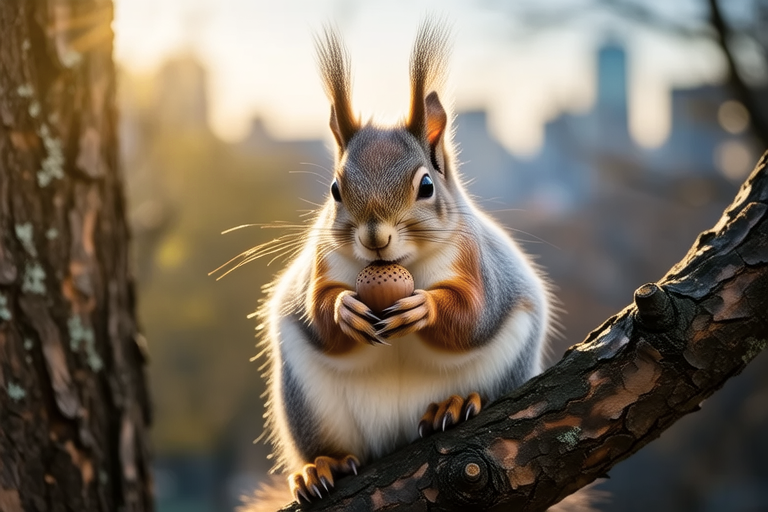
Urban Squirrels: Adaptations, Behaviors, and Interactions
Welcome to an exploration of the fascinating world of urban squirrels! These creatures have successfully adapted to the hustle and bustle of city life, thriving in environments that would seem daunting to many other animals. This article delves into the behaviors, habitats, and adaptations of urban squirrels, focusing on their interactions within city environments. We’ll discuss their diet, foraging techniques, and hoarding habits, as well as how they navigate human-made structures and the challenges they face. Additionally, we will analyze their social structures, communication methods, and breeding patterns, highlighting unique survival strategies and behavioral changes due to urbanization.
Habitats and Adaptations
Urban squirrels are incredibly adaptable, making their homes in various parts of cities, from parks and gardens to industrial areas and residential neighborhoods. They are particularly drawn to green spaces like parks and large trees, which provide them with shelter, food, and nesting sites. In cities, squirrels often live in tree cavities, nests built in branches, or even attics and chimneys when natural options are scarce.
Their adaptability is one of the reasons why they thrive in urban environments. For instance, gray squirrels (Sciurus carolinensis) have been observed using power lines as highways to travel across cities, while fox squirrels (Sciurus niger) prefer open spaces and are commonly seen in suburban yards. The red squirrel (Tamiasciurus hudsonicus), less common in urban areas, prefers dense forest habitats but can still be found in urban parks with ample tree cover.
Diet and Foraging Techniques
Squirrels have a diverse diet, primarily consisting of seeds, nuts, fruits, and buds. Their ability to find and store food is crucial for survival, especially during winter months when food sources are limited. Urban squirrels have developed several foraging techniques to maximize their efficiency:
- Scanning for Food: They continuously scan their surroundings, looking for fallen nuts, seeds, or fruits discarded by humans. They also search for bird feeders, compost bins, and garbage cans.
- Hoarding: Squirrels are known for their caching behavior, where they bury nuts and seeds in various locations. This practice ensures a steady food supply throughout the year. They use their keen sense of smell to locate these caches later.
- Foraging in Human-made Structures: In urban areas, squirrels frequently visit bird feeders, gardens, and even compost bins. Some squirrels have learned to open lids on trash cans to access food inside.
Navigating Human-made Structures
Urban squirrels have mastered the art of navigating human-made structures, often using them to their advantage. They climb trees, fences, and buildings with remarkable agility. Their strong claws and flexible bodies allow them to move effortlessly between surfaces, while their sharp teeth help them gnaw through wood, plastic, and even metal when necessary.
One of the most notable examples of their adaptability is their use of power lines. Gray squirrels have been observed using power lines as highways to travel across cities, reducing the need to cross busy roads. However, this behavior can also pose risks, as squirrels may get electrocuted or fall from high altitudes.
Challenges in Urban Settings
Despite their adaptability, urban squirrels face numerous challenges in city environments. One of the primary threats is traffic. Squirrels often need to cross busy streets to reach food sources or safe areas, putting them at risk of being hit by vehicles. Another challenge is competition for resources, as cities are home to a variety of animals, including domestic pets and other wildlife, all competing for the same food sources.
Additionally, urban development can lead to habitat loss, forcing squirrels to relocate or adapt to new environments. In some cases, this can result in increased stress levels and decreased reproductive success. To mitigate these challenges, it’s essential to create and maintain green spaces, such as parks and gardens, that provide squirrels with suitable habitats and food sources.
Social Structures and Communication
Urban squirrels are generally solitary animals, but they do interact with others during mating season and when defending territories. They communicate using a range of vocalizations, body language, and scent markings. For example, they may emit high-pitched chirps or barks to warn others of potential dangers or to attract mates. They also use scent glands to mark territory boundaries and signal availability for mating.
In terms of social structure, gray squirrels tend to form loose colonies, while fox squirrels are more solitary. Red squirrels, on the other hand, are territorial and aggressive towards intruders, especially during mating season. Despite their solitary nature, squirrels are capable of forming bonds with each other, particularly between mothers and offspring.
Breeding Patterns
Urban squirrels typically breed once or twice a year, depending on the species and environmental conditions. Gray squirrels, for instance, usually mate in late winter or early spring and again in summer. Fox squirrels follow a similar pattern, while red squirrels tend to breed only once a year, usually in late winter. Gestation periods vary between species, ranging from about 39 to 44 days.
Newborn squirrels are born blind and hairless, weighing just a few grams. They remain in the nest for several weeks before venturing out with their mother. At around six to ten weeks old, they begin to forage independently, although they may continue to rely on their mother for guidance and protection until they reach maturity.
Unique Survival Strategies and Behavioral Changes
Urbanization has led to significant changes in squirrel behavior, with some species developing unique survival strategies. For example, gray squirrels have been observed using bird feeders to supplement their diet, while fox squirrels have adapted to living in close proximity to humans, often seeking refuge in attics and chimneys.
Moreover, squirrels have become increasingly adept at avoiding predators in urban areas. They have learned to recognize the sounds of approaching vehicles and to quickly dart across roads when safe to do so. They also avoid areas with high predator activity, such as parks with large populations of dogs or cats.
Comparisons Between Different Species of Urban Squirrels
While all urban squirrels share certain traits, there are notable differences between species. Gray squirrels are the most common in North American cities, known for their acrobatic skills and ability to navigate complex environments. Fox squirrels are larger and more robust, often found in suburban areas. Red squirrels, though less common in urban settings, are highly territorial and aggressive, preferring dense forest habitats.
Another difference lies in their diet preferences. Gray squirrels are omnivorous, consuming a wide range of foods, while fox squirrels tend to focus on nuts and seeds. Red squirrels have a more specialized diet, relying heavily on pine cones and seeds from coniferous trees.
Conclusion
Urban squirrels have proven themselves to be remarkably adaptable creatures, capable of thriving in environments that would seem inhospitable to many other animals. Their ability to navigate human-made structures, find food in urban settings, and communicate effectively with each other is truly impressive. By understanding the behaviors, habitats, and adaptations of urban squirrels, we can better appreciate their role in our communities and work towards creating more sustainable and wildlife-friendly urban environments.
