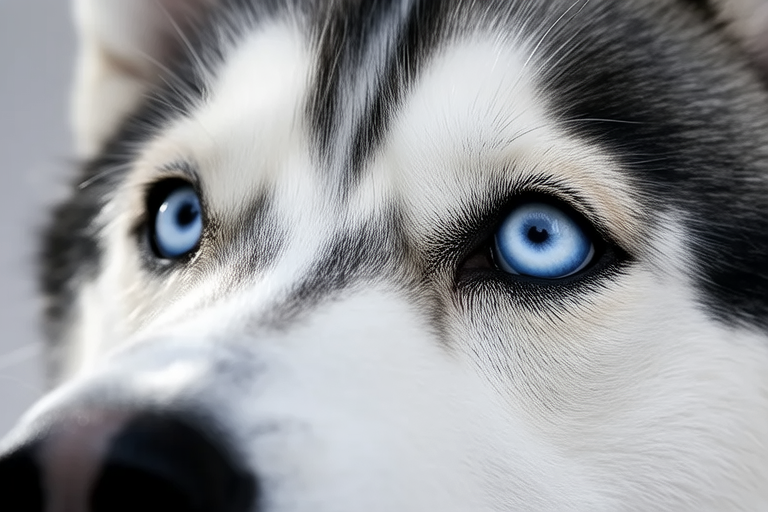
The Mysterious Eyes of the Siberian Husky: Facts and Myths
When it comes to dogs, few breeds capture the imagination quite like the Siberian Husky. With their striking blue eyes, bushy tails, and thick coats, they’re a breed that stands out in any crowd. But what makes these eyes so captivating? What’s the truth behind the myths that surround them? In this article, we’ll dive into the fascinating world of the Siberian Husky’s eyes, separating fact from fiction and uncovering the science behind their unique appearance.
The Allure of the Siberian Husky’s Blue Eyes
One of the most iconic features of the Siberian Husky is its piercing blue eyes. However, blue isn’t the only color you might find in a Siberian Husky’s gaze. Brown, amber, and even heterochromia (where one eye is a different color from the other) are also common. This variation is due to genetics, particularly the American Kennel Club standard which allows for both blue and brown eyes. The blue-eyed gene is dominant, but the brown-eyed gene can still express itself if present.
The Siberian Husky’s eye color is more than just a matter of aesthetics; it’s tied to the breed’s history. Originally bred by the Chukchi people of Northeastern Asia, these dogs were selected for their ability to withstand harsh Arctic conditions and pull sleds over long distances. Their eye color variations are part of a broader spectrum of physical traits that helped them thrive in their environment.
Myths Surrounding Siberian Husky Eyes
There are several myths surrounding the Siberian Husky’s eyes that have been perpetuated over time. One of the most persistent is the belief that their blue eyes give them supernatural vision. While their eyes are indeed striking, there’s no evidence to suggest they possess any special powers of sight. Another myth is that the color of a Husky’s eyes determines its level of intelligence. This idea is based on the misconception that blue-eyed dogs are inherently smarter than those with brown eyes. In reality, a dog’s intelligence is determined by a complex interplay of genetics, environment, and training, not by the color of its eyes.
It’s important to dispel these myths because they can lead to misunderstandings about the breed and potentially influence breeding practices. Responsible breeding focuses on overall health and temperament rather than superficial characteristics like eye color.
The Science Behind Siberian Husky Vision
While Siberian Huskies may not have supernatural vision, they do possess some impressive visual abilities. One of their standout traits is their exceptional night vision. Thanks to a high concentration of rod cells in their retinas, Huskies can see well in low-light conditions. This adaptation was crucial for their original role as sled dogs, allowing them to navigate through snow-covered terrain during the long Arctic nights.
Another advantage of their vision is their wide field of peripheral vision. Unlike humans, who have a relatively narrow field of view, Huskies can see almost all the way around themselves without moving their heads. This helps them stay aware of their surroundings while working, making them excellent team players when pulling sleds. Additionally, their eyes are protected from the harsh winds and cold temperatures of their native environment by thick eyelids and a third eyelid, known as a nictitating membrane, which acts as a natural shield.
Historical Context: Breeding for Physical Traits
The Siberian Husky was originally bred by the Chukchi people of Northeastern Asia to be a versatile working dog capable of thriving in extreme conditions. These dogs were prized for their endurance, speed, and resilience, and their physical traits were carefully selected to enhance these qualities. Over generations, the Chukchi people bred Huskies with strong bodies, thick coats, and, of course, eyes suited to their environment.
Their blue eyes, in particular, were not just a random occurrence but a result of selective breeding. The blue-eyed gene is dominant, and early breeders likely favored dogs with this trait because it stood out and made the dogs more recognizable. Over time, this preference led to a higher prevalence of blue-eyed Huskies within the breed. It’s worth noting that the blue-eyed gene is not exclusive to Siberian Huskies; it can also be found in other breeds, such as Australian Shepherds and Border Collies.
Caring for Your Siberian Husky’s Eyes
Owning a Siberian Husky is a rewarding experience, but it also comes with responsibilities. One of the most important aspects of caring for your Husky is maintaining the health of its eyes. Regular veterinary check-ups are essential, especially since Huskies are prone to certain eye-related issues, such as progressive retinal atrophy (PRA), cataracts, and corneal dystrophy. Early detection and treatment can help prevent these conditions from worsening.
In addition to professional care, there are several steps you can take at home to keep your Husky’s eyes healthy. Regularly cleaning around the eyes with a damp cloth can prevent the buildup of debris and discharge. Be sure to use separate cloths for each eye to avoid spreading bacteria. Providing your Husky with a balanced diet rich in vitamins A, C, and E can also support eye health. These vitamins are crucial for maintaining the integrity of the retina and preventing oxidative damage.
Lastly, ensure your Husky gets plenty of exercise and mental stimulation. A well-exercised dog is less likely to develop behavioral issues that could lead to eye injuries. Regular playtime and training sessions will keep your Husky happy and healthy, both physically and mentally.
Conclusion
The Siberian Husky’s eyes are a testament to the breed’s rich history and adaptability. From their striking blue hues to their remarkable vision capabilities, these dogs continue to captivate us with their unique appearance. By understanding the science behind their eye color and vision, we can appreciate the breed’s true nature beyond mere aesthetics. As responsible pet owners, it’s our duty to provide the best possible care for our furry companions, ensuring they live long, healthy lives. So, next time you gaze into the mysterious eyes of a Siberian Husky, remember the centuries of breeding and evolution that brought them to us, and the ongoing commitment required to keep them thriving.
