Adventures in Arachnophilia: Taming the Wild Heterometrus spinifer at Home
Welcome to the fascinating world of arachnophilia! If you’re captivated by the idea of bringing a piece of the wild into your home, the Heterometrus spinifer, commonly known as the Asian forest scorpion, might just be the perfect pet for you. These creatures are not only visually striking but also offer a unique experience for those who are willing to learn and care for them properly.
The Unique Charm of Heterometrus spinifer
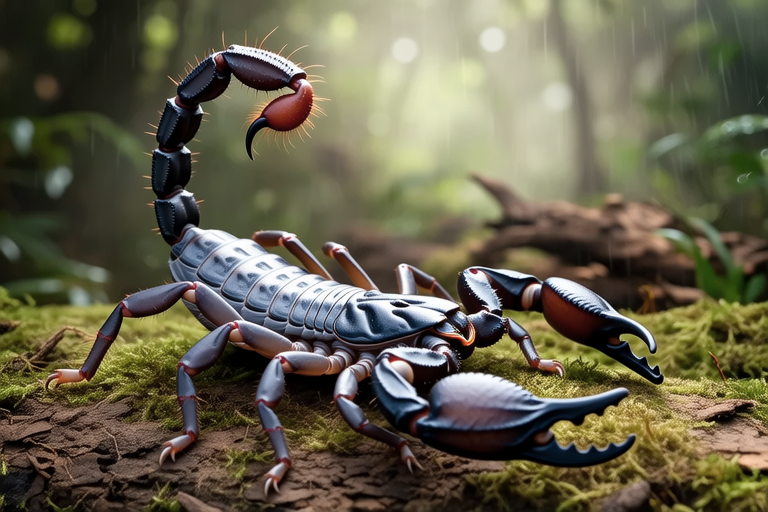
The Heterometrus spinifer is one of the largest scorpions, reaching lengths of up to 20 cm. Their dark brown exoskeletons, adorned with distinctive spines, make them look like tiny armored warriors. Despite their intimidating appearance, these scorpions are generally docile and can be quite gentle when handled correctly. They are nocturnal creatures, which means they are most active during the night, making them ideal for those who prefer quieter pets.
Necessary Setup for Their Habitat
Enclosure Size
The first step in setting up a suitable habitat for your Heterometrus spinifer is choosing the right enclosure. A terrarium that measures at least 30x30x45 cm (12x12x18 inches) is recommended for a single adult. This provides ample space for the scorpion to move around and establish its territory.
Substrate
For substrate, a mix of coconut fiber and sphagnum moss works well. This combination helps maintain the necessary humidity levels while providing a natural environment for your scorpion. The substrate should be deep enough for the scorpion to burrow, approximately 10 cm (4 inches).
Temperature and Humidity
Heterometrus spinifer thrive in tropical conditions. The ideal temperature range is between 24°C and 28°C (75°F and 82°F). Use a thermostat-controlled heat mat placed under one side of the enclosure to create a temperature gradient. This allows the scorpion to regulate its body temperature by moving between warmer and cooler areas. Maintain a humidity level of 70-80% by misting the enclosure daily.
Lighting Requirements
Since these scorpions are nocturnal, they do not require UVB lighting. However, a low-wattage red or blue light can be used for nighttime viewing without disturbing their natural behavior. Always ensure that any lights used are safe and do not overheat the enclosure.
Feeding Habits
Feeding your Heterometrus spinifer is relatively simple. They are carnivorous and will eat a variety of insects, such as crickets, mealworms, and dubia roaches. Feed them once or twice a week, depending on their size and activity level. It’s important to gut-load the feeder insects with nutritious food before offering them to your scorpion to ensure it receives all necessary nutrients.
Handling Techniques
Handling your Heterometrus spinifer requires patience and practice. Always wash your hands before and after handling to avoid transferring oils or chemicals from your skin. Use a pair of thick gloves for added protection. Gently scoop the scorpion from its enclosure, being careful not to squeeze or pinch. Place it on a flat surface and allow it to walk onto your hand. Never grab or pick up the scorpion by its tail.
Common Health Issues
Like any other animal, Heterometrus spinifer can face health issues. One of the most common problems is dehydration, which can lead to lethargy and poor appetite. Ensuring proper humidity levels and providing a shallow water dish can prevent this. Another issue is mite infestation, which can cause irritation and discomfort. Regular cleaning of the enclosure and monitoring for signs of infestation can help keep your scorpion healthy.
Personal Anecdotes
My journey with Heterometrus spinifer began with a bit of trepidation. I was initially unsure about the responsibility of caring for such a large and potentially dangerous-looking creature. However, after a few months, I found myself completely enchanted by their gentle nature. One memorable moment was when my scorpion, named Spike, successfully molted for the first time. Watching him shed his old exoskeleton and emerge soft and vulnerable was both fascinating and humbling. It reminded me of the delicate balance required to care for these magnificent animals.
Deepening the Bond and Maintaining a Healthy Environment
To deepen your bond with your Heterometrus spinifer, try observing its behavior closely. Each scorpion has its own personality, and understanding what makes yours unique can enhance your connection. Spend time watching it hunt and interact with its environment. You can also gently handle your scorpion more frequently to get it accustomed to human presence.
Maintaining a healthy environment involves regular cleaning and monitoring. Change the substrate every month to prevent the buildup of bacteria and mold. Clean the enclosure thoroughly, paying special attention to any areas where food is left uneaten. Regularly check the temperature and humidity levels to ensure they remain within the optimal range.
In conclusion, taming the wild Heterometrus spinifer at home can be a rewarding and enriching experience. By providing the right habitat, proper care, and attention, you can enjoy a unique relationship with these fascinating creatures. Whether you’re a novice or an experienced arachnophile, the adventures in arachnophilia await you!
