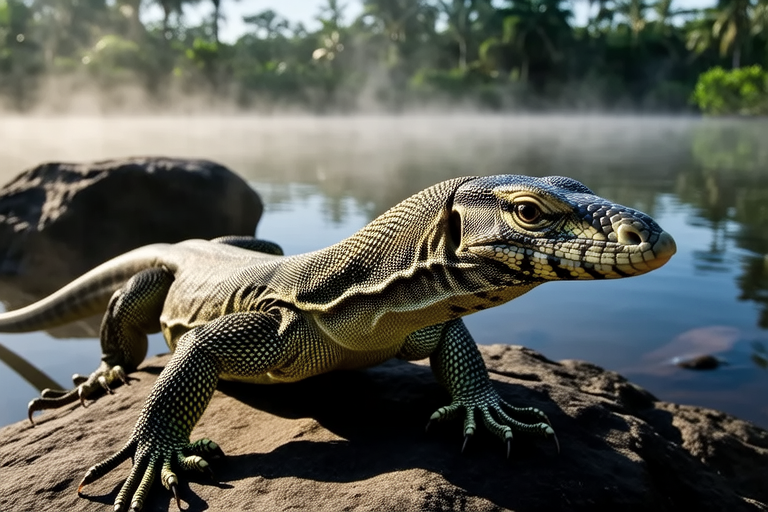
The Fascinating World of Water Monitors: A Closer Look at these Agile Predators
Water monitors, scientifically known as Varanus salvator, are among the most fascinating reptiles found across Southeast Asia, extending into parts of India. These agile predators have captivated the interest of biologists and nature enthusiasts alike with their remarkable adaptability and striking features. From bustling markets to dense jungles, these creatures thrive in a variety of habitats, showcasing an array of unique adaptations that make them stand out in the animal kingdom.
Habitat Range and Physical Characteristics
Water monitors inhabit a vast range stretching from southern India through Southeast Asia, including countries like Indonesia, Malaysia, and Thailand. They are equally at home in both aquatic and terrestrial environments, which is reflected in their physical attributes. Growing up to three meters long, these lizards are among the largest monitor species, characterized by their long necks, powerful tails, and sharp claws. Their streamlined bodies are covered in scales that vary in color from brown to grey, providing excellent camouflage against predators.
One of the most notable physical traits of water monitors is their impressive tail, which serves multiple purposes. It acts as a propeller in water, enabling swift swimming, and as a weapon when threatened. The tail also plays a crucial role in balance and movement on land, allowing these reptiles to run at high speeds and climb trees with ease. Their agility is further enhanced by strong limbs and flexible bodies, making them adept hunters in diverse terrains.
Diet and Role as Opportunistic Predators
Water monitors are opportunistic feeders, meaning they eat whatever is available in their environment. Their diet primarily consists of fish, amphibians, birds, and small mammals, but they are not picky eaters. They have been observed consuming eggs, insects, and even carrion, showcasing their adaptability. This varied diet positions them as important regulators within their ecosystems, helping to control populations of smaller animals and maintaining ecological balance.
The hunting techniques of water monitors are as diverse as their diet. On land, they use their keen sense of smell to track prey, often ambushing unsuspecting animals. In water, they employ stealth and speed, diving beneath the surface to catch fish or frogs. Their sharp teeth and powerful jaws allow them to subdue and consume their meals efficiently. Despite their formidable appearance, water monitors are generally non-aggressive towards humans unless provoked.
Behavior and Breeding Habits
Water monitors are solitary creatures, preferring to live alone except during mating season. Males are particularly territorial and will engage in combat with rivals to secure the best nesting sites. Females lay clutches of around 20 to 60 eggs, typically burying them in sandy soil to incubate naturally. Hatchlings are miniature versions of adults, capable of fending for themselves immediately after birth.
These reptiles exhibit fascinating behaviors that enhance their survival. For instance, they can remain submerged for extended periods, thanks to a specialized lung structure that allows for prolonged underwater respiration. Additionally, water monitors are known to use their tongues to detect chemical signals in the air, much like snakes, enhancing their ability to locate prey and navigate their surroundings.
Interesting Facts and Ecosystem Interactions
Water monitors have several intriguing aspects that set them apart from other reptiles. One such fact is their ability to communicate through body language, using postures and movements to convey messages. Another is their role in seed dispersal; after eating fruits, seeds pass through their digestive system and are later deposited elsewhere, contributing to forest regeneration.
In ecosystems, water monitors play a significant role as apex predators. Their presence helps regulate populations of smaller animals, preventing overgrazing and ensuring biodiversity. However, this dominant position also makes them vulnerable to human activities, particularly habitat destruction and illegal trade.
Conservation Status and Efforts
Despite their resilience, water monitors face numerous threats, primarily due to human activities. Habitat loss caused by deforestation and urbanization reduces the availability of suitable living spaces, while poaching for the exotic pet trade and traditional medicine further exacerbates their plight. Conservationists are working tirelessly to protect these magnificent creatures through various initiatives.
Efforts include establishing protected areas, raising public awareness about the importance of conserving wildlife, and implementing stricter regulations on wildlife trade. Education campaigns aimed at local communities emphasize the benefits of preserving natural habitats and discourage practices harmful to water monitors. By fostering a deeper understanding and appreciation for these creatures, we can contribute to their survival and ensure future generations have the opportunity to witness their awe-inspiring agility.
In conclusion, water monitors are more than just impressive predators; they are vital components of the ecosystems they inhabit. Their unique adaptations, diverse diets, and complex behaviors offer valuable insights into the intricate web of life. As we continue to explore and understand these remarkable reptiles, it becomes increasingly clear that their preservation is not only essential for biodiversity but also for the health and balance of our planet’s ecosystems.
