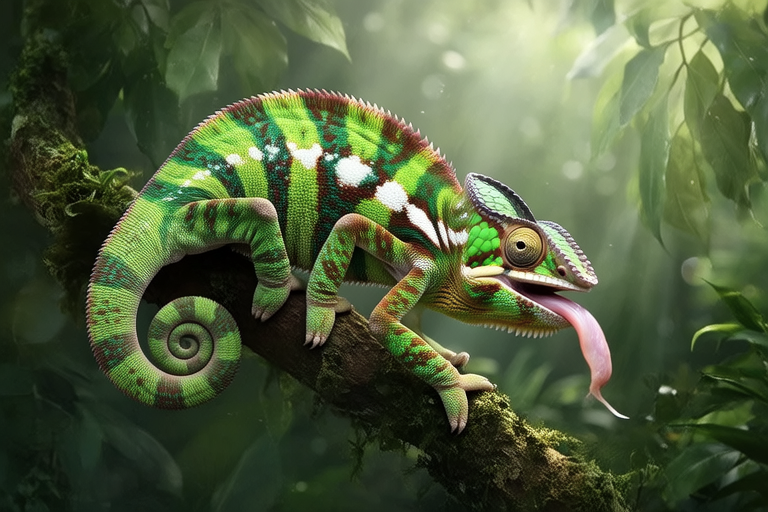
How to Create a Happy Home for Your Color-Changing Companion: The Ultimate Guide to Chameleon Care
Selecting the Appropriate Enclosure Size and Type
Choosing the right enclosure is crucial for your chameleon’s happiness and well-being. A vertical cage that mimics their natural environment is ideal. For hatchlings, a 15-gallon tank will suffice, but adults require a minimum of 3 feet by 2 feet by 4 feet (length x width x height). Ensure the enclosure has good ventilation and is made of mesh to allow for air circulation and proper light penetration.
Essential Lighting Requirements for UVB Exposure
Your chameleon needs UVB light to synthesize vitamin D3, which aids in calcium absorption. Use a high-quality UVB bulb designed for reptiles, positioned at the top of the enclosure, no more than 12 inches from where your chameleon spends most of its time. Replace the bulb every six months, even if it still appears to be working, as UVB output diminishes over time. Provide 10-12 hours of UVB light daily, followed by darkness for rest.
Temperature Gradients Within the Habitat
Chameleons thrive in a temperature gradient ranging from 75°F to 95°F (24°C to 35°C) during the day, with a drop to around 65°F (18°C) at night. Place a basking spot at one end of the enclosure, heated by a ceramic heat emitter or a basking bulb, reaching temperatures between 90°F and 95°F (32°C to 35°C). This encourages natural behavior like basking and thermoregulation.
Proper Humidity Levels
Maintain humidity levels between 40% and 70%. Mist the enclosure twice daily using a spray bottle, ensuring that all surfaces are thoroughly wet. Incorporate a drip system or automatic misting device for consistent humidity. Monitor humidity with a hygrometer to ensure your chameleon remains healthy and hydrated.
Suitable Substrates
Avoid using substrates that can be ingested, such as sand or small gravel. Opt for a layer of coconut fiber or cypress mulch, which retains moisture and provides a natural feel. These substrates also promote beneficial bacteria and help maintain the correct humidity levels.
Variety of Safe Plants for Enrichment and Climbing
Incorporate live plants to provide enrichment and climbing opportunities. Ficus benjamina, pothos, and Schefflera arboricola are popular choices. Ensure these plants are non-toxic and pesticide-free. Artificial plants can supplement real ones, but live plants offer better humidity and enrichment.
Balanced Diet and Feeding Techniques
Feed a variety of insects, including crickets, dubia roaches, and waxworms. Dust insects with a calcium supplement daily and a multivitamin once or twice a week. Offer insects that are no larger than the space between your chameleon’s eyes to prevent choking. Use tweezers to present food, encouraging natural hunting behavior.
Hydration Methods
Ensure your chameleon stays hydrated through regular misting and providing a shallow water dish. Some chameleons prefer to drink droplets from leaves rather than drinking directly from a bowl. Position the water dish at the bottom of the enclosure to encourage this behavior.
Regular Health Checks
Monitor your chameleon daily for any changes in behavior or appearance. Look for signs of lethargy, loss of appetite, or unusual discharge. Regularly check the enclosure’s cleanliness, ensuring that the substrate and plants are free from mold and debris.
Signs of Illness
Be vigilant for signs of illness, such as swollen eyes, respiratory issues, or skin discoloration. If you notice any of these symptoms, consult a veterinarian specializing in exotic pets immediately. Early intervention can make a significant difference in treatment outcomes.
Tips for Handling
Handle your chameleon gently and infrequently to avoid stress. Always support their body when holding them, avoiding sudden movements. Allow your chameleon to acclimate to your touch gradually, building trust over time.
Advice on Social Interaction
Chameleons are solitary animals and do not require companionship. However, they can interact positively with humans. Spend time observing your chameleon in its natural habitat, fostering a bond without unnecessary handling. Respect their need for solitude while providing the care and attention they require.
