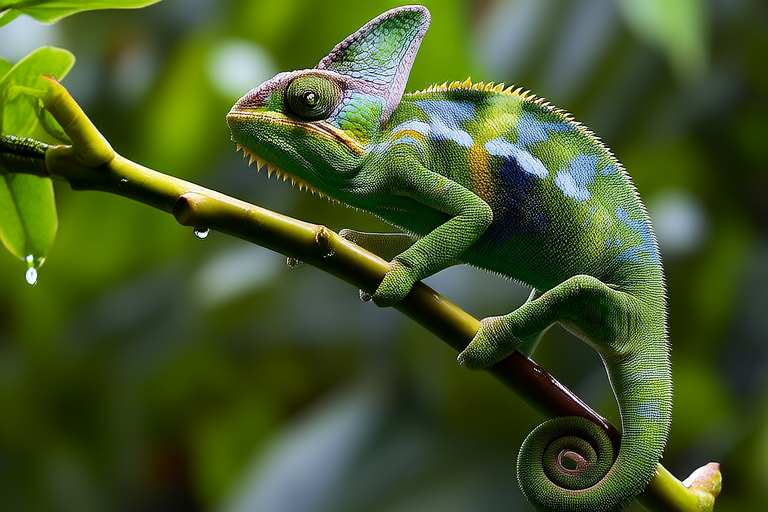
Top 10 Most Fascinating Facts About Chameleons That Will Amaze You
Chameleons, those quirky reptiles with their bulging eyes and prehensile tails, have long captured the imagination of people around the world. These creatures are not only visually striking but also possess a range of remarkable adaptations that make them one of nature’s most fascinating animals. From their ability to change color to their unique hunting methods, there is much more to these creatures than meets the eye. This article delves into the top 10 most captivating facts about chameleons, offering a glimpse into the extraordinary world of these reptilian wonders.
1. Color-Changing Masters
The most iconic feature of chameleons is their ability to change color. Unlike popular belief, this adaptation isn’t primarily for camouflage. Instead, it serves as a form of communication and temperature regulation. Chameleons have specialized cells called chromatophores beneath their skin that contain different pigments. By expanding or contracting these cells, chameleons can display a wide array of colors, ranging from vibrant greens and reds to deep browns and blacks. This color-changing mechanism allows them to signal their mood, health, or readiness to mate to other chameleons.
2. Independent Eye Movement
One of the most distinctive features of chameleons is their bulging, independently moving eyes. Each eye can rotate up to 180 degrees, allowing chameleons to look in two different directions simultaneously. This remarkable adaptation helps them spot potential prey or predators without moving their head, giving them a significant advantage in both hunting and self-defense. The independent movement of their eyes also aids in depth perception, which is crucial for accurately targeting insects from a distance.
3. Tongue-Like Hunting Tools
Chameleons are renowned for their incredibly long tongues, which can be up to twice the length of their body. This specialized hunting tool is covered in sticky saliva, enabling chameleons to catch insects with great precision. The tongue’s rapid extension, which can occur in just milliseconds, is powered by a complex system of muscles and elastic tissues. This mechanism allows chameleons to strike at prey with lightning speed, making them formidable hunters in their environment.
4. Prehensile Tails
Chameleons have prehensile tails that help them balance and grip onto branches while climbing. Unlike many other lizards, chameleons can wrap their tails around objects like a monkey would, providing additional support and stability. This adaptation is particularly useful when navigating through dense foliage or crossing gaps between trees. Additionally, the tail can serve as a fifth limb, allowing chameleons to hang upside down temporarily if needed.
5. Unique Locomotion
Chameleons move in a way that sets them apart from other reptiles. They walk slowly and deliberately, with each foot moving independently in a diagonal sequence. This gait allows them to maintain balance on narrow branches and uneven surfaces. Their feet are specially adapted, featuring two toes pointing forward and two pointing backward, providing a secure grip on various textures and angles. This unique locomotion style contributes to their agility and adaptability in diverse environments.
6. Diverse Diet
While most chameleons are insectivores, some species have adapted to include other food sources in their diet. In addition to insects, certain chameleons have been observed eating small vertebrates, such as geckos, and even nectar from flowers. This dietary flexibility has allowed some species to thrive in environments where insect populations may fluctuate. However, the majority of chameleons still rely heavily on insects, consuming a variety of species depending on availability.
7. Longevity and Lifespan
Compared to many other reptiles, chameleons have relatively short lifespans. On average, most chameleon species live between 3 to 5 years in the wild. However, some larger species, like the veiled chameleon, can live up to 7 years under optimal conditions. Captive chameleons often have longer lifespans due to better access to food and protection from predators. Proper care and a healthy environment can significantly extend their lifespan, making them valuable subjects for research and conservation efforts.
8. Solitary Nature
Chameleons are generally solitary animals, preferring to live alone rather than in groups. This behavior is linked to their territorial nature and the need to avoid competition for resources. Male chameleons, in particular, will defend their territory aggressively against rivals. While they may come together during mating season, interactions between chameleons outside of reproduction are rare. This solitary lifestyle is an essential aspect of their survival strategy, ensuring that each individual has enough space and food to thrive.
9. Temperature Sensitivity
Chameleons are ectothermic, meaning they rely on external sources of heat to regulate their body temperature. As a result, they are highly sensitive to changes in temperature and require specific environmental conditions to survive. Many species prefer temperatures between 75°F and 95°F (24°C and 35°C) during the day, with cooler temperatures at night. They bask in sunlight to warm up and retreat to shaded areas when they need to cool down. This sensitivity to temperature underscores the importance of creating appropriate habitats for captive chameleons.
10. Camouflage and Survival
Despite popular misconceptions, chameleons don’t change color solely for camouflage. Their color-changing abilities are primarily used for communication and temperature regulation. However, their body shape and texture do play a crucial role in helping them blend into their surroundings. The bumps and ridges on their skin can mimic the appearance of leaves or bark, making them less visible to predators. This natural camouflage, combined with their ability to remain motionless for extended periods, enhances their chances of survival in the wild.
In conclusion, chameleons are truly remarkable creatures with a plethora of fascinating adaptations that enable them to thrive in their environments. From their color-changing abilities to their unique hunting techniques, these reptiles continue to amaze and inspire wonder. Whether you’re a seasoned biologist or simply someone who appreciates the beauty of nature, learning about chameleons offers a deeper appreciation for the diversity and complexity of life on Earth.
