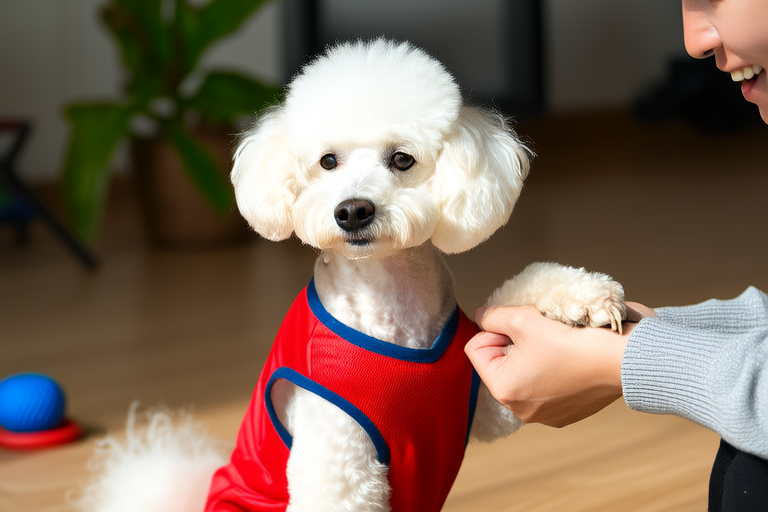
Poodle Training Hacks Every Owner Needs to Try
Welcome to a comprehensive guide on how to train your poodle effectively. Poodles are known for their intelligence and high energy levels, which can be both a blessing and a challenge. This article will provide you with practical, easy-to-follow training tips specifically tailored for poodles, covering basic obedience, house training, and addressing common behavioral issues. Whether you’re a new or experienced owner, this guide will help you establish a positive training environment for your beloved pet.
Understanding Your Poodle’s Unique Traits
Poodles are highly intelligent dogs that thrive on mental stimulation and physical exercise. Their intelligence makes them quick learners but also means they can become bored easily if not challenged. Their high energy levels require consistent physical activity to prevent unwanted behaviors like chewing or digging. By understanding these traits, you can tailor your training methods to harness their strengths and address potential challenges.
Basic Obedience Training
Start with the Basics: Sit, Stay, Come
Begin your poodle’s training journey with fundamental commands like ‘sit,’ ‘stay,’ and ‘come.’ These commands form the foundation of all further training. Use treats as positive reinforcement when your poodle follows a command correctly. For example, when teaching ‘sit,’ hold a treat above your dog’s head and say the command. As your poodle looks up, its bottom should naturally lower into a sitting position. Reward with a treat and praise.
A real-life scenario where this has been effective is with a poodle named Max. His owner, Sarah, noticed that once Max learned ‘sit,’ he was more responsive during walks, making it easier to manage distractions like other animals or people.
Teaching ‘Leave It’
The ‘leave it’ command is crucial for preventing your poodle from picking up potentially harmful items. Start by placing a treat in your closed hand and saying ‘leave it.’ When your poodle stops trying to get the treat, open your hand and give them a different treat as a reward. Gradually increase the difficulty by moving to a bowl or another object. A success story involves a poodle named Bella who used to chase after food dropped on the floor. After learning ‘leave it,’ Bella’s owner, Mark, no longer had to worry about her eating dangerous things.
House Training
Establish a Routine
Poodles respond well to consistency. Establish a regular feeding and bathroom schedule to help predict when your poodle needs to go outside. Take your poodle out first thing in the morning, after meals, and before bedtime. Use a specific phrase like ‘go potty’ to signal it’s time to relieve themselves. Consistency helps your poodle understand what behavior is expected.
For instance, Emily, a poodle owner, found that by sticking to a routine, her puppy, Charlie, quickly learned to associate certain times of day with going outside.
Positive Reinforcement
When your poodle successfully uses the bathroom outside, reward them with praise and treats. Avoid punishing accidents inside; instead, clean them up thoroughly to remove any scent that might encourage repeat incidents. Positive reinforcement encourages your poodle to continue good behavior.
Jane, the owner of a poodle named Daisy, shared that praising Daisy whenever she went potty outside helped her learn faster than any punishment ever could.
Addressing Common Behavioral Issues
Chewing and Destructive Behavior
Poodles, especially puppies, often chew due to teething or boredom. Provide appropriate chew toys and rotate them regularly to keep your poodle interested. If you catch your poodle chewing on something inappropriate, redirect them to a suitable toy and praise them for the switch. Crate training can also be beneficial as it provides a safe space for your poodle and discourages destructive behavior when you’re away.
Lisa, a poodle owner, found that keeping a variety of chew toys available for her poodle, Sam, helped reduce his tendency to chew on furniture.
Barking and Excessive Barking
Poodles can be vocal, but excessive barking can be managed. Identify triggers for the barking and work on desensitizing your poodle to them. Teach your poodle the ‘quiet’ command by waiting for a pause in the barking, then rewarding the silence. Be patient and consistent; reducing barking takes time.
David, the owner of a poodle named Toby, used the ‘quiet’ command to reduce Toby’s barking when guests arrived. Over time, Toby learned to bark only briefly before settling down.
Enhancing Your Poodle’s Intelligence
Mental Stimulation
Engage your poodle’s mind with puzzle toys and games that challenge their problem-solving skills. Hide treats around the house and encourage your poodle to find them. Rotate toys to keep things interesting and prevent boredom. Mental stimulation is essential for keeping your poodle happy and well-behaved.
Amy, the owner of a poodle named Zoe, discovered that introducing new puzzle toys kept Zoe mentally engaged and reduced her need to chew on things around the house.
Training Classes and Socialization
Enroll your poodle in obedience classes or agility training to enhance their skills and socialize them with other dogs. Socialization is vital for building confidence and reducing anxiety in new situations. Regular training sessions provide mental and physical exercise, helping to channel your poodle’s energy positively.
John, the owner of a poodle named Finn, found that attending agility classes not only improved Finn’s physical fitness but also boosted his confidence around other dogs.
Celebrating Successes and Remaining Patient
Training your poodle requires patience and dedication. Celebrate small victories along the way to maintain a positive atmosphere. Encourage your poodle through praise and rewards, fostering a strong bond between you. Remember, every dog learns at their own pace, so stay consistent and supportive throughout the process.
By following these training hacks, you’ll be well on your way to having a well-behaved, happy poodle. Whether you’re dealing with basic obedience, house training, or common behavioral issues, these tips will help you harness your poodle’s intelligence and energy positively. With time, effort, and love, you’ll create a harmonious relationship built on mutual respect and trust.
