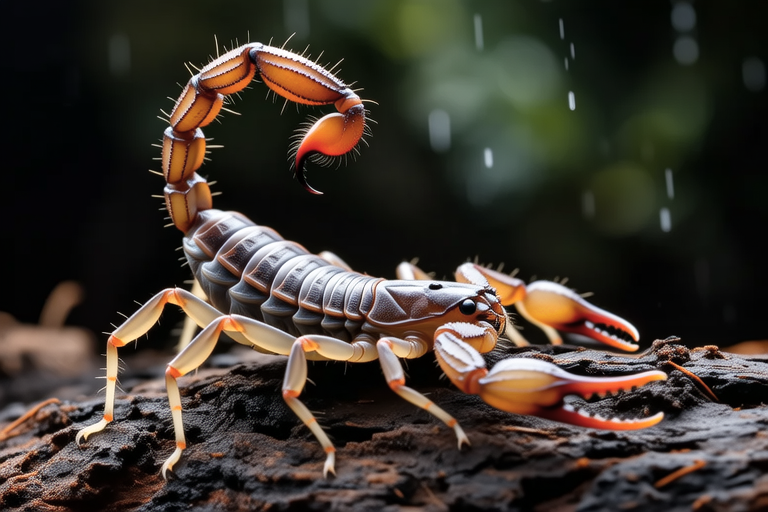
Uncovering the Secrets of the Hairy Reticulate Whip Scorpion: A Close Encounter
The world of arachnids is vast and diverse, filled with creatures that defy imagination. Among these fascinating beings, the hairy reticulate whip scorpion (Phrynus longipes) stands out as a peculiar and intriguing species. Known for its unique appearance and secretive lifestyle, this creature has captured the curiosity of biologists and nature enthusiasts alike. In this article, we delve into the mysteries surrounding the hairy reticulate whip scorpion, exploring its habitat, hunting techniques, behaviors, and significance within the broader ecosystem.
Unique Appearance and Habitat
The hairy reticulate whip scorpion is named for its distinct physical features. It boasts a flattened body, typically measuring between 1 and 2 inches in length, covered in fine hairs that give it its characteristic “hairy” appearance. These hairs serve multiple purposes, from sensing vibrations to enhancing its grip on surfaces. The most striking feature of the hairy reticulate whip scorpion is its elongated front appendages, which resemble whips and are used for navigation and capturing prey. Unlike true scorpions, these arachnids lack venomous stingers but possess powerful pedipalps, or pincers, at the front of their bodies.
These creatures are predominantly found in tropical and subtropical regions across Central and South America. They thrive in humid environments, often residing under rocks, logs, and in crevices. Their preference for dark, damp areas aligns perfectly with their nocturnal lifestyle, allowing them to avoid the harsh sunlight and potential predators during the day. The dense vegetation and abundant hiding spots in these habitats provide ideal conditions for the hairy reticulate whip scorpion to thrive, making them a common sight in rainforests and other moist ecosystems.
Feeding Habits and Hunting Techniques
The hairy reticulate whip scorpion is primarily an opportunistic predator, feeding on a variety of small invertebrates such as insects, spiders, and even smaller scorpions. Its hunting strategy is both stealthy and efficient. Using its long, sensitive front appendages, it can detect the slightest movements of potential prey. Once a target is identified, the whip scorpion employs its powerful pedipalps to grasp and crush the victim, injecting digestive enzymes into the prey’s body to break down its tissues. This method allows the hairy reticulate whip scorpion to consume its meal externally, sucking up the liquefied nutrients through its mouthparts.
Interestingly, the hairy reticulate whip scorpion also exhibits cannibalistic tendencies, particularly when food sources are scarce. This behavior underscores the importance of maintaining a balanced ecosystem where these creatures can find adequate sustenance without resorting to intra-species predation. Their diet and hunting methods play a crucial role in controlling insect populations, contributing to the overall health and stability of their habitats.
Nocturnal Activities and Defensive Mechanisms
The hairy reticulate whip scorpion is a nocturnal creature, spending most of its active hours during the night. This behavior is closely tied to its preference for cooler temperatures and the need to avoid daytime predators. As darkness falls, these arachnids emerge from their hiding places to hunt and explore their surroundings. Their keen senses, particularly their ability to detect vibrations and chemical cues, make them formidable hunters in the dimly lit environment of their natural habitats.
Despite their imposing appearance, hairy reticulate whip scorpions are relatively harmless to humans. Their primary defense mechanism involves playing dead when threatened, a behavior known as thanatosis. By curling up and remaining motionless, they can avoid attracting the attention of potential predators. Additionally, some species produce a foul-smelling secretion from glands located near their hind legs, which serves as an effective deterrent against attackers. This combination of passive and active defense strategies allows the hairy reticulate whip scorpion to navigate its challenging environment with relative ease.
Reproduction Process and Life Cycle
The reproductive process of the hairy reticulate whip scorpion is both complex and fascinating. Mating occurs during the rainy season, when males perform elaborate courtship dances to attract females. These dances involve intricate movements of the front appendages and pedipalps, signaling readiness and suitability as a mate. Once a female accepts a male’s advances, copulation takes place, and the male deposits sperm packets, or spermatophores, onto the ground. The female then collects these packets and fertilizes her eggs internally.
After mating, the female carries her fertilized eggs in a brood sac attached to her abdomen for several weeks. During this time, she carefully guards the developing embryos, ensuring their safety and well-being. Once the eggs hatch, the young offspring remain attached to their mother for a short period, receiving nourishment from specialized glands on her body. After a few days, the juveniles disperse to lead independent lives. The entire life cycle of the hairy reticulate whip scorpion spans approximately two years, with individuals reaching maturity after one year.
Understanding the reproductive cycle of the hairy reticulate whip scorpion provides valuable insights into the population dynamics and survival strategies of these creatures. It highlights the importance of environmental factors, such as humidity and temperature, in facilitating successful reproduction and the continuation of the species.
Ecological Significance
The study of the hairy reticulate whip scorpion and similar species is crucial for comprehending broader ecological systems. These arachnids play vital roles in maintaining the balance of their ecosystems by controlling insect populations and serving as prey for larger predators. Their presence indicates the health and diversity of their habitats, offering clues about the overall condition of the environment.
Moreover, the unique adaptations and behaviors of the hairy reticulate whip scorpion provide valuable lessons in evolutionary biology. By examining how these creatures have developed specific traits to survive and thrive in their respective environments, scientists gain a deeper understanding of the forces driving evolution. This knowledge can be applied to various fields, from conservation efforts to the development of new technologies inspired by nature.
In conclusion, the hairy reticulate whip scorpion is a remarkable and enigmatic creature that continues to captivate researchers and nature lovers alike. Its distinctive appearance, secretive lifestyle, and vital ecological functions make it an invaluable subject of study. By uncovering the secrets of this lesser-known species, we not only expand our knowledge of the natural world but also contribute to the preservation of biodiversity and the sustainability of our planet’s ecosystems.
