How to Choose the Right Yoga Mat
Find Your Perfect Yoga Mat
Introduction to Yoga Mats
Yoga mats are essential tools for any practitioner, providing comfort, support, and a stable surface for various poses. A good yoga mat can enhance your experience by offering the right amount of cushioning and grip. In this article, we will explore the importance of choosing the right yoga mat and provide an overview of the different types available in the market.
Considerations When Choosing a Yoga Mat
Thickness and Cushioning
The thickness of your yoga mat plays a significant role in determining how much cushioning it provides. Thicker mats offer more padding, which can be beneficial for those with joint issues or who prefer softer surfaces. However, they may also be less portable.
Size and Portability
Another important factor to consider is the size of the mat. Standard yoga mats measure around 72 inches long and 24 inches wide, but some may prefer longer or wider options depending on their height or preferred poses. Additionally, think about how easily you can transport your mat, especially if you plan to practice at home or travel frequently.
Material Composition
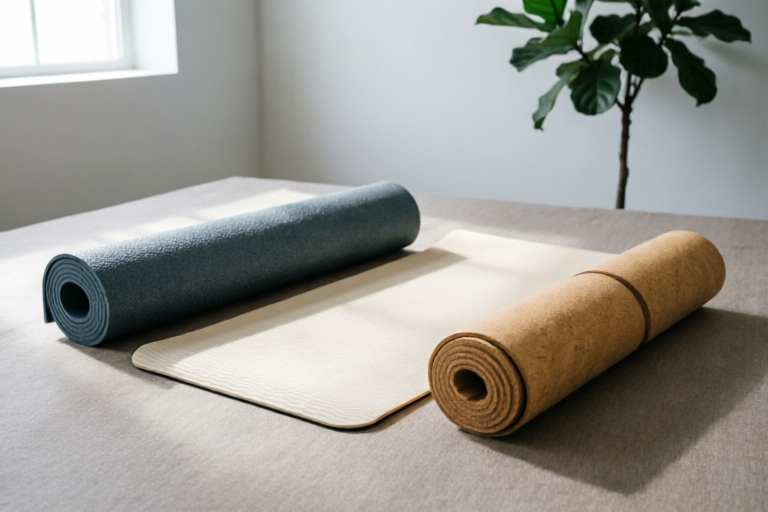
Yoga mats come in various materials such as PVC, TPE, and natural rubber. Each type has its own set of pros and cons:
- PVC (Polyvinyl Chloride): Known for being durable and affordable, PVC mats are often considered the most popular choice among beginners. However, they may not be as eco-friendly due to potential environmental concerns associated with their production.
- TPE (Thermoplastic Elastomer): An eco-friendly alternative to PVC, TPE mats are made from recycled materials and offer similar durability without compromising on sustainability.
- Natural Rubber: These mats provide excellent grip and are biodegradable, making them a great option for environmentally conscious yogis. However, they tend to be heavier than other options and may require more maintenance.
Grip Level and Texture
The grip level of your yoga mat is critical for maintaining balance during poses. Some mats have textured surfaces designed to prevent slipping, while others rely on smoothness for ease of movement between postures. Consider what feels most comfortable for you when selecting a mat.
Types of Yoga Mats Based on Material
PVC Yoga Mats
Pros: Durable, affordable, widely available.
Cons: Not eco-friendly, may emit odors initially.
TPE Yoga Mats
Pros: Eco-friendly, recyclable, non-toxic.
Cons: Slightly more expensive than PVC.
Natural Rubber Yoga Mats
Pros: Excellent grip, biodegradable, non-slip surface.
Cons: Heavier, requires regular cleaning.
Additional Features to Look For
Non-Slip Bottom
A non-slip bottom ensures that your mat stays in place throughout your session, preventing unwanted movements that could disrupt your flow or lead to injury.
Easy-to-Clean Surface
Hygiene is another important aspect of using a yoga mat. Look for mats with easy-to-clean surfaces that allow you to maintain cleanliness between practices.
Storage Solutions
Convenient storage solutions like roll-up handles or straps make it easier to carry your mat when traveling or storing it at home.
Budget Considerations and Value for Money
Price Range Comparison
Prices for yoga mats vary depending on factors such as material quality, brand reputation, and additional features. On average, expect to pay anywhere from $10-$100 for a decent mat.
Longevity vs. Initial Cost Analysis
While higher-priced mats might seem like a better investment upfront, lower-cost options can still serve well if properly cared for. Assess whether investing in a pricier model aligns with your long-term goals and usage frequency.
Tips for Finding Affordable Yet High-Quality Options
Look for sales or discounts offered by reputable brands, check customer reviews for recommendations on budget-friendly models, and consider purchasing second-hand from trusted sources.
Conclusion and Final Recommendations
In summary, selecting the perfect yoga mat involves considering multiple factors including thickness, size, material composition, grip level, and additional features. Depending on your personal preferences and needs—whether you're just starting out or already experienced—you should aim to find a mat that supports both comfort and functionality.
We recommend trying out different types of mats before committing to one purchase. This way, you'll ensure that whatever you end up buying meets all of your expectations regarding performance and usability.
Comments

I compared this with other mats and decided to go with this one. Best purchase so far.

As a beginner, I was worried about spending too much but this mat has been fantastic!

Worth it! The non-slip bottom is a game changer. No more slipping during poses.
Love the eco-friendly option. Has anyone tried the TPE mat? How does it compare to PVC?

I've had mine for 6 months now and it's still holding up great. Worth every penny.

Thinking of buying this. Anyone know if it's worth the price?
This is my second yoga mat and I'm really happy with the grip. It's perfect for hot yoga!