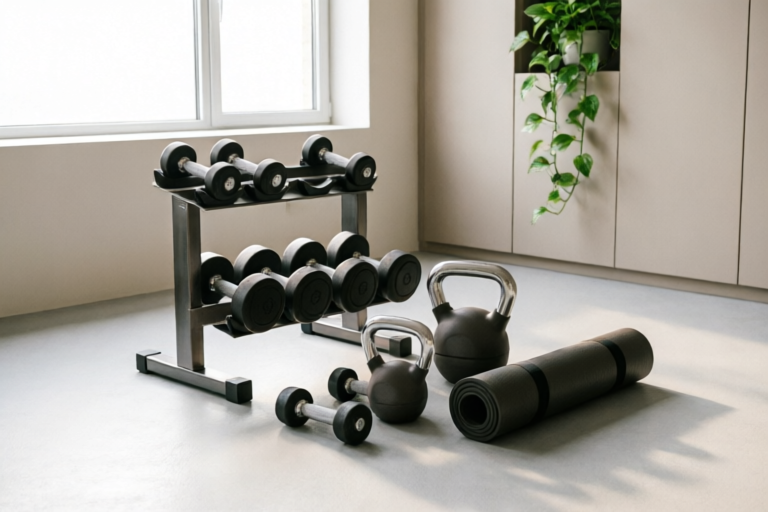
Best Compact Home Gym Equipment Solutions For Small Apartments
Transform Your Space, Elevate Your Health
Introduction: The Urban Fitness Dilemma
In the heart of modern urban living, space is often the most precious commodity. As metropolitan populations swell, the average square footage of residential homes continues to shrink, presenting a unique challenge for fitness enthusiasts: how to maintain a rigorous workout routine when every inch of floor space counts. The classic vision of a home gym—complete with racks, heavy barbells, and massive treadmills—is quickly dismissed by many city dwellers who live in cozy studios or one-bedroom apartments.
This dilemma goes beyond mere logistics; it touches on psychology and lifestyle. Moving between home and a commercial gym cuts into valuable time, and the cost of memberships adds up quickly. Yet, the benefits of home training—convenience, privacy, and 24/7 accessibility—are undeniable. The solution lies not in giving up on fitness, but in reimagining what a home gym looks like. Smart equipment choices can overcome spatial constraints, turning a bedroom corner or a walkway into a fully functional training sanctuary.
The goal of this comprehensive guide is to help apartment residents navigate the market for compact home gym equipment. We will explore versatile tools that deliver professional results without requiring professional real estate. By prioritizing space-saving gear, individuals can unlock consistent health improvements without compromising their living environment. Whether you are a strength athlete looking to maintain muscle mass or a cardio enthusiast chasing endurance, there is a footprint-friendly solution tailored to your needs. Let us embark on this journey to redefine fitness within four walls.
Core Strength Tools for Tiny Spaces
When considering strength training in a confined area, the priority is versatility combined with minimal storage requirements. Traditional free weight sets are inefficient for small apartments because they demand dedicated wall racks or large floor spaces. Instead, we focus on equipment that multiplies utility through adjustability and portability.
Adjustable Dumbbells: The All-in-One Solution
If there is one piece of equipment that tops the list for small space workouts, it is adjustable dumbbells. These devices offer the equivalent of dozens of traditional dumbbells in a single compact frame. Modern designs utilize innovative selection systems, such as dials, knobs, or selector pins, allowing users to change weights from 5 to 90 pounds (depending on the model) instantly.
- Bulk Reduction: A set of adjustable dumbbells can reduce the clutter of a traditional rack weighing up to 50 pounds per hand by replacing them with a single pair. They store neatly side-by-side, occupying less than two square feet of floor space.
- Exercise Range: They allow for a full spectrum of movements including bicep curls, shoulder presses, lunges, goblet squats, and chest presses. The weight increments are precise enough to facilitate progressive overload, which is crucial for muscle growth.
- Investment Value: While the upfront cost is higher than buying basic pairs, the price per pound of weight adjustment makes them highly cost-effective over time compared to building a full barbell set.
Suspension Trainers for Functional Mobility
Suspension training systems have revolutionized home workouts by utilizing gravity and body weight rather than external resistance plates. These systems typically consist of straps with handles and foot cradles that anchor to a sturdy point, such as a door anchor, ceiling mount, or beam.
- Ancoring Versatility: Many models come with door anchors that fit securely behind standard interior doors. This eliminates the need for permanent wall installation, making it perfect for renters who cannot drill holes. You simply open the door, loop the anchor, and close it to secure the system.
- Core Stability: Unlike isolation exercises with dumbbells, suspension training demands constant core engagement to stabilize the body. This leads to improved balance and functional strength, which translates well to daily movements outside the gym.
- Foldable Design: These trainers weigh almost nothing and roll up into a small carry bag roughly the size of a water bottle. When not in use, they can be tucked into a closet shelf or drawer without anyone knowing they are there.
Heavy-Duty Resistance Bands
Often overlooked, resistance bands are the unsung heroes of apartment strength training. Made from high-quality latex or rubber, they provide variable resistance that increases as the band stretches. They are particularly effective for rehabilitation, mobility work, and hypertrophy.
- Portability: A full stack of bands fits easily into a pocket. Traveling athletes appreciate this feature, but at home, it means you can move them anywhere in the apartment for different exercises.
- Joint Friendly: Because the tension curve differs from iron weights, bands place less stress on joints, reducing the risk of injury in a smaller environment where safety clearance is tight.
- Progression: Bands can be stacked to increase resistance linearly or non-linearly. For legs and glutes, looped bands offer excellent activation for lateral walks and hip thrusts, essential moves for lower body development.
The Role of Yoga Mats and Pads
No discussion of strength tools is complete without mentioning the foundational surface. High-density workout mats serve multiple purposes: grip, cushioning, and hygiene. In shared buildings, sound dampening is critical, and a thick mat helps muffle impact sounds during dynamic movements. Additionally, they protect your existing flooring from sweat damage and scratches caused by dropped weights or anchors.
Compact Cardio Machinery Alternatives
Cardiovascular health remains a cornerstone of fitness, but traditional treadmills and spin bikes are notoriously bulky. For apartment residents, the key criteria for cardio equipment are foldability, quiet operation, and storage potential. We must balance intensity with neighborly peace.
Foldable Treadmills and Walking Pads
Foldable treadmills have advanced significantly in recent years. Modern iterations feature hydraulic lift systems that allow the deck to be folded upright against the wall. However, true space-savers are often walking pads—slim, low-profile motorized belts designed for walking rather than running. They sit flat under sofas or beds and require no standing space for a console, as control is often handled via remote or app.
- Storage Under Bed: With a thickness profile of merely 2 inches, these pads slide effortlessly under low-profile beds. This maximizes vertical real estate, clearing the floor entirely for strength training when the unit is stowed.
- Noise Reduction: Low-noise motors coupled with shock absorption decks minimize vibration transmission through floors, a vital consideration for second-story apartments to avoid complaints from downstairs neighbors.
- Utilization: Walking is a sustainable cardiovascular activity that requires less recovery than high-intensity running. Incorporating walking into your workday while using a standing desk converter is a great way to burn calories passively.
Compact Ellipticals
For those seeking low-impact, joint-friendly cardio, elliptical machines offer the motion of running without the pounding on the knees. Compact models, often referred to as "stride trainers," feature shorter strides and a smaller footprint.
- Vertical Storage: Some ultra-compact ellipticals are designed to stand upright like a vacuum cleaner. They require zero floor space when locked in the upright position.
- Upper Body Engagement: Unlike standard treadmills, these units include moving handlebars that engage the upper body, providing a full-body workout. This doubles the calorie burn in half the square footage compared to leg-only machines.
- Magnetic Resistance: Magnetic drive systems are virtually silent, ensuring your workout does not become a disturbance. Belt-driven systems tend to have some mechanical friction noise, making magnetic preferred for thin-walled apartments.
Quiet Rowing Machines
Rowing machines are often dismissed as too long, but space-conscious versions exist that focus on performance over luxury features. Models that utilize air or water resistance are powerful, but magnetic resistance rowers are quieter.
- Hinged Folding Mechanisms: Many rowers have seats that fold upwards or frames that hinge in the middle. This reduces the machine’s length by nearly half when folded.
- River-Like Motion: The smooth stroke promotes flexibility and strengthens the back and legs simultaneously. It is a high-efficiency movement pattern ideal for short, focused workout sessions.
- Clean Lines: Sleek, modern designs allow these machines to blend into the decor rather than looking like industrial gym equipment sitting in a living room. Color schemes matter to keep the aesthetic pleasing when the gear is partially visible.
Vertical and Hidden Storage Systems
Even the smallest equipment requires organization. Clutter creates visual chaos, which can negatively impact motivation. Implementing vertical and hidden storage systems keeps your "gym" invisible until it is time to train, maintaining a sense of calm in your living quarters.
Wall-Mounted Racks and Hooks
Utilizing vertical wall space is the most effective way to reclaim floor area. Heavy-duty hooks can hold resistance bands, jump ropes, and yoga mats. Wall-mounted shelves can house towels and small accessories. Pegboards are another excellent option, offering customizable layouts for hanging kettlebells or medicine balls at waist height.
- Pegboard Customization: Pegboards allow you to organize gear visually. You know exactly where your jump rope is located. They are easy to install and can cover an entire wall behind a sofa or bed.
- Load Bearing Capacity: Ensure that wall mounts are secured into studs if holding heavy weights like dumbbells. Drywall anchors alone may fail under the weight of significant resistance.
- Zoning: Create distinct zones. Hang active gear near the window for natural light, and store heavier, static items closer to outlets for charging if electronic monitors are involved.
Rolling Storage Carts and Bins
Not everyone wants things permanently mounted to the wall. Mobile storage offers flexibility. Utility carts on wheels can hold supplements, shaker bottles, gloves, and headphones. When cleaning or rearranging the room, the cart can be moved to another location.
- Tiered Shelving: Multi-tier rolling carts utilize vertical columns efficiently, allowing for more items on a small footprint. Wheeled bases mean you can push the cart into a corner, creating a temporary boundary for your workout zone.
- Decorative Bins: Choose fabric bins or decorative baskets that match your home decor. If guests arrive, the equipment can be covered or stored out of sight instantly, reducing the pressure of a cluttered room.
- Accessories Management: Keep electronics chargers and cables organized here to prevent tangled wires from becoming trip hazards on the floor.
Multi-Purpose Furniture
In the era of multifunctional design, furniture itself can serve as storage. Ottomans with hidden compartments can house yoga mats or stability balls. Benches with built-in shelving under the seat can hold books or small weights. Investing in furniture that serves a dual purpose is a strategic financial and spatial decision.
- Ottomans: A foam ottoman that opens up reveals a cavity perfect for storing folded mats or foam rollers. This removes the need for a dedicated gym cabinet.
- Platform Beds: Lift-up beds are essential for storing larger items like foam boxes or even folded treadmills beneath the sleeping area. This hides bulky items completely.
- Coffee Tables: Low-profile tables that can be pushed aside or lifted create open floor space for stretching routines.
Layout Optimization and Safety Considerations
Designing a gym layout in a small apartment requires attention to both ergonomics and safety. Maximizing floor area involves strategic positioning, while safety considerations protect both the user and the property.
Maximizing Floor Area
To make a small room feel larger, keep the center clear. Avoid placing permanent fixtures in the middle of the room. Stick to peripheral placement. Use rugs with defined boundaries to indicate workout zones. Lighting plays a massive role; bright, cool-toned LED lighting mimics the gym atmosphere and enhances focus.
- Flow Paths: Ensure you have a clear path from entry to exit. Do not arrange equipment so that you must navigate around obstacles to leave the room.
- Center Focus: Place mirrors on walls opposite your main equipment. This allows for self-correction of posture without taking up extra room for a freestanding mirror.
- Lighting Layers: Use dimmable smart bulbs to switch between relaxation mode (warm light) and workout mode (bright white light).
The Power of Full-Length Mirrors
Mirrors create an illusion of depth and space. In a small studio, a large mirror can make the room appear twice as wide. Beyond aesthetics, they are functional tools for checking form. Correct alignment prevents injury and ensures muscle recruitment accuracy.
- Motion Tracking: Watching yourself squat or press overhead helps identify imbalances in symmetry or range of motion.
- Spatial Awareness: Mirrors help you see if you are stepping too far forward or drifting off-center during lateral movements.
- Installation Height: Mount mirrors at eye level and extend downward so you can check your knees and feet alignment during lower body exercises.
Protecting Flooring with High-Density Workout Mats
Apartment floors vary widely, from laminate to hardwood to carpet. Protection is mandatory. High-density rubber tiles or interlocking EVA foam mats absorb shock and prevent scratches. They also provide traction, preventing slips during sweaty sessions.
- Impact Absorption: Dropping heavy dumbbells on bare wood will cause damage. Mats absorb the shock, protecting both the floor and the weight plates.
- Vibration Control: Dense rubber mats decouple the machine from the floor, reducing noise transfer to neighbors below. This is a courtesy that protects rental deposits and relationships.
- Hygiene Layer: Mats create a barrier against dirt and sweat, making cleaning easier. Regular wiping with disinfectant wipes extends the life of both the mat and the underlying floor.
Conclusion: Balancing Health and Lifestyle
Fitness in a small apartment is not about limitations; it is about adaptation and creativity. The urban fitness dilemmas of the past are being solved by modern innovation in equipment design and storage solutions. By prioritizing space-saving gear, residents can build effective routines that rival commercial gym experiences.
The key takeaway is consistency over volume. You do not need a 500-square-foot basement to gain health benefits. A focused 15-minute session with resistance bands or a quick HIIT workout on a yoga mat is more impactful than sporadic hours at a crowded facility. The compact equipment discussed—from adjustable dumbbells to foldable treadmills—offers the tools needed to execute these sessions effectively.
We encourage readers to approach their home setup with a mindset of "smart efficiency." Select equipment that lasts, stores well, and performs reliably. Don’t rush into expensive purchases; test with portable options first to see what you actually use. Protect your living space, respect your neighbors, and invest in your well-being.
Ultimately, compact living should not compromise fitness progress. With the right layout, storage strategies, and gear selection, your apartment can become a hub of vitality. Start small, optimize your space, and enjoy the freedom of a private, accessible home gym that adapts to your lifestyle, not the other way around.
Comments

Thinking of getting the suspension trainer next. Looks versatile enough for small spaces.

Good read. Using a mirror definitely helps with form and makes the studio apartment less cramped.

Does anyone have experience with the foldable treadmills? Looking for something sturdy but easy to hide.

Swapped my huge bench for the adjustable dumbbells from your list. Room feels huge now lol.

The storage cart idea is genius! Keeps everything tucked away when we have guests over.

Honestly the price was steep initially but quality holds up. Cheaper alternatives snapped in half for me.
Anyone else worried about noise? Asking before buying the treadmill. Can't risk upsetting my neighbors.

Just picked up the bands you recommended. Cheap but surprisingly durable. Saved so much closet space.