How These Clever Critters Became Urban Legends in Our Cities
In the bustling heart of modern cities, where concrete jungles replace natural habitats, certain animals have not only survived but thrived, adapting their behaviors and appearances to coexist with human civilization. These creatures, through their unique traits and interactions with humans, have woven themselves into the fabric of local folklore and urban legends. This article explores how these clever critters have become urban legends in our cities, focusing on specific examples from various cities around the world.
The Mysterious Raccoon of Toronto
Toronto, known for its vibrant nightlife and diverse population, is also home to one of the most adaptable urban animals – the raccoon. These masked bandits are notorious for their dexterity and curiosity, often rummaging through garbage bins and causing mischief in residential areas. Their ability to open latches and turn doorknobs has earned them a reputation as cunning creatures.
Historically, raccoons were primarily found in rural areas but have increasingly moved into urban settings due to the availability of food and shelter. In Toronto, there’s a widespread belief that raccoons possess supernatural abilities, such as shape-shifting or communicating with spirits. This myth likely stems from their nocturnal habits and elusive nature, making them seem otherworldly to city dwellers.
Scientifically, raccoons are intelligent mammals capable of problem-solving tasks. Their hands, similar to primates’, allow them to manipulate objects effectively. While they don’t possess magical powers, their behavior can be intriguing enough to fuel legends.
The Phantom Cat of New York City
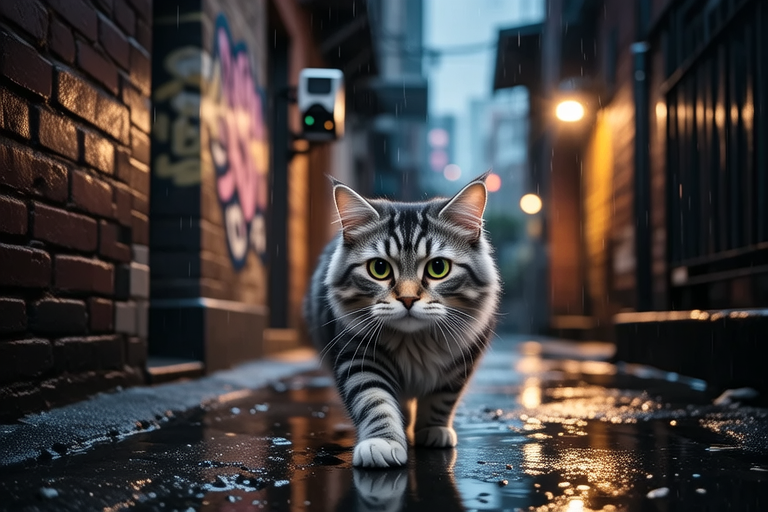
New York City, the epitome of urban life, harbors another enigmatic creature – the phantom cat. This black feline, often seen darting between buildings or perched atop skyscrapers, has captured the imagination of many residents. The phantom cat is said to bring good luck to those who catch a glimpse of it.
The legend of the phantom cat dates back to the early 20th century when Manhattan was rapidly expanding. As more people moved into the city, stray cats became common sights in alleyways and rooftops. Over time, these felines were romanticized as mystical guardians watching over the city.
From a biological standpoint, the phantom cat represents domesticated felines that have adapted to urban living. Their agility and stealth make them well-suited for navigating narrow spaces and evading detection. While they may not have any special powers, their presence adds an element of mystery to the urban landscape.
The Wise Owl of Athens
Athens, birthplace of philosophy and democracy, is associated with wisdom and knowledge. It’s fitting, then, that this ancient city is home to a revered owl species known locally as the wise owl. These owls, commonly spotted near temples and public squares, are believed to offer guidance and insight to those who seek it.
The connection between owls and wisdom dates back thousands of years to Greek mythology. Athena, goddess of wisdom, was often depicted accompanied by an owl. This association has endured throughout history, influencing how modern Athenians view these birds.
Beyond mythology, owls are indeed highly intelligent creatures. They possess excellent night vision and hearing, enabling them to hunt efficiently even in low-light conditions. Their keen senses and silent flight contribute to their air of mystery, further cementing their status as symbols of wisdom.
The Trickster Squirrel of San Francisco
San Francisco, famous for its fog and steep hills, is inhabited by a playful yet mischievous squirrel population. These squirrels, particularly those residing in Golden Gate Park, have developed a reputation for stealing food and toys left unattended by park visitors. Their antics have earned them the nickname “trickster squirrels.”
The trickster squirrel legend emerged during the mid-20th century when Golden Gate Park became a popular recreational area. As more people visited the park, interactions between humans and squirrels increased, leading to tales of squirrels outsmarting tourists.
Biologically speaking, squirrels are opportunistic feeders that will take advantage of readily available resources. Their quick reflexes and agile movements allow them to snatch items swiftly before disappearing into the foliage. While their behavior might be annoying at times, it showcases their adaptability and resourcefulness.
The Mythical Fox of Kyoto
Kyoto, a city rich in tradition and culture, is home to a mythical fox known as the kitsune. According to Japanese folklore, kitsune possess shapeshifting abilities and can influence human emotions through their magical powers. In reality, the foxes of Kyoto are small, reddish-brown animals that inhabit suburban and rural areas surrounding the city.
The kitsune legend has deep roots in Japanese mythology, dating back centuries. These stories often involve foxes tricking or helping humans, depending on the moral of the tale. The presence of real foxes in Kyoto likely inspired these myths, as their sleek appearance and secretive nature made them ideal subjects for storytelling.
While foxes aren’t capable of shapeshifting or manipulating emotions, they are highly adaptable creatures that have lived alongside humans for millennia. Their intelligence and social behavior have contributed to their prominence in both folklore and scientific studies.
The Resilient Rat of London
London, one of the oldest and most populous cities in Europe, has long been associated with rats. These rodents, infamous for their resilience and ability to thrive in urban environments, have become iconic figures in British culture. The rat population in London is so large that some believe they outnumber humans.
The rat legend in London can be traced back to the Great Plague of 1665, which devastated the city. During this period, rats were blamed for spreading the disease, leading to widespread fear and loathing. Over time, rats became symbols of survival and adaptability, embodying the spirit of Londoners who persevered through difficult times.
From a scientific perspective, rats are incredibly resilient animals that can survive in harsh conditions. They reproduce quickly and have a wide range of diets, allowing them to thrive in diverse environments. While they pose health risks, their ability to endure urbanization highlights their remarkable adaptability.
The Conclusion
These clever critters, from raccoons to rats, have demonstrated remarkable adaptability and intelligence in their transition from rural to urban environments. Their unique behaviors and appearances have captivated human imaginations, giving rise to fascinating urban legends that reflect the cultural and historical contexts of their respective cities.
By exploring the myths surrounding these animals, we gain insight into the complex relationships between humans and wildlife in urban settings. Understanding the scientific truths behind these legends helps us appreciate the ingenuity and resilience of these creatures while fostering greater respect for urban biodiversity.
