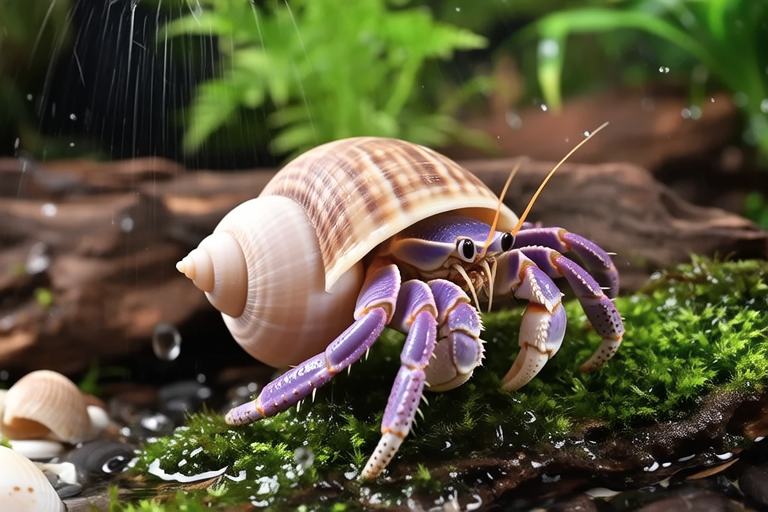
How to Make Your Hermit Crab Happy and Healthy at Home
Hermit crabs are fascinating creatures that make wonderful pets. However, they have specific needs that must be met to ensure their happiness and health. This guide will walk you through the essential aspects of hermit crab care, including habitat setup, temperature and humidity control, diet requirements, safe substrate options, appropriate tank mates, regular health checks, enrichment activities, and common mistakes to avoid.
Proper Habitat Setup
The first step in creating a happy and healthy home for your hermit crab is setting up the right habitat. A glass or acrylic aquarium with a secure lid is ideal, as it allows for ventilation while preventing escapes. The tank should be large enough to accommodate multiple hermit crabs comfortably, ideally providing at least 10 gallons per crab. For instance, a 20-gallon tank can house around four to five hermit crabs.
In addition to the tank itself, you’ll need to provide plenty of hiding spots, climbing structures, and places to explore. Driftwood, cork bark, and coconut huts make excellent hiding spots. These items also help maintain humidity levels within the tank. Live or artificial plants can add aesthetic value and provide additional hiding spots.
Temperature and Humidity Control
Maintaining the correct temperature and humidity levels is crucial for hermit crabs’ well-being. Hermit crabs thrive in temperatures between 75°F and 85°F (24°C to 29°C). Use a reliable thermometer to monitor the temperature inside the tank. If necessary, place a heat mat under one side of the tank to create a temperature gradient, allowing your crabs to move to cooler areas if needed.
Humidity should be kept between 70% and 80%. To achieve this, mist the tank daily with distilled water or rainwater. A hygrometer can help you monitor humidity levels accurately. Additionally, placing a shallow water dish filled with dechlorinated water and a sponge in the tank helps maintain humidity levels. Avoid using tap water, as it contains chlorine and chloramines that can be harmful to hermit crabs.
Diet Requirements
Hermit crabs are omnivores, meaning they eat both plant-based and animal-based foods. Their diet should include a variety of fresh fruits, vegetables, and protein sources. Suitable fruits and vegetables include apples, bananas, carrots, sweet potatoes, and leafy greens. Offer these foods in small quantities and remove any uneaten portions after 24 hours to prevent mold growth.
Protein sources such as boiled eggs, cooked chicken, and fish can be offered occasionally. You can also provide hermit crabs with calcium-rich foods like cuttlebone and crushed eggshells. A high-quality commercial hermit crab food can supplement their diet, ensuring they receive all necessary nutrients. Always offer fresh water daily, and change it regularly to prevent bacterial growth.
