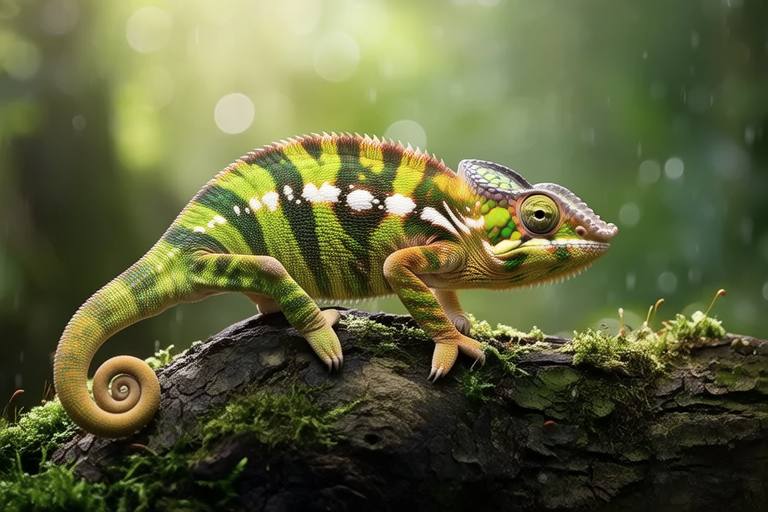
The Intriguing World of Chameleons: Beyond Camouflage
Chameleons are among nature’s most captivating creatures, renowned for their remarkable ability to alter their skin color. This characteristic is not merely a tool for camouflage but a multifaceted mechanism that serves numerous vital functions. By delving into the biological underpinnings of color change, we can appreciate the complexity and versatility of these reptiles.
The Mechanism Behind Color Change
The process of color change in chameleons involves specialized cells known as chromatophores. These cells contain pigments that can expand or contract, altering the appearance of the skin. Chromatophores are divided into three layers: xanthophores (yellow), erythrophores (red), and iridophores (reflective cells). Each layer plays a crucial role in producing various colors. When a chameleon desires to change its color, it sends signals through its nervous system, which causes the chromatophores to expand or contract, leading to the desired hue.
Color Change Beyond Camouflage
While camouflage is one of the most well-known uses of color change, chameleons employ this ability for several other purposes. Communication is a significant function of color change, with males often displaying vibrant colors to attract mates or intimidate rivals. Temperature regulation is another critical aspect; darker colors absorb more heat, helping chameleons warm up in cooler environments. Mood expression also plays a role, with stress or excitement manifesting through color shifts.
Communication
Male chameleons use vivid colors during mating displays, signaling their readiness and fitness to potential partners. For instance, the panther chameleon (Furcifer pardalis) exhibits striking patterns and hues when courting females. Conversely, aggressive displays involve darkening and expanding the body to appear larger and more intimidating. This behavior is observed in species like the veiled chameleon (Chamaeleo calyptratus).
Temperature Regulation
Chameleons bask in the sun to regulate their body temperature. Darker colors help absorb more sunlight, warming the chameleon faster. The veiled chameleon demonstrates this by darkening its skin on cold mornings to quickly raise its internal temperature. In contrast, lighter colors reflect sunlight, preventing overheating during hot days.
Mood Expression
Emotional states can influence a chameleon’s color. Stress or fear may cause the animal to turn pale or darken significantly. Excitement or agitation might lead to rapid color changes. The Jackson’s chameleon (Trioceros jacksonii) provides an example of how mood can affect coloration, with individuals showing distinct patterns when agitated or relaxed.
Diverse Species and Their Color-Changing Behaviors
Each chameleon species has unique color-changing behaviors tailored to their environment and social interactions. The panther chameleon, native to Madagascar, is famous for its vibrant patterns used in courtship rituals. The veiled chameleon, found in the Arabian Peninsula, utilizes color changes for both thermoregulation and communication. Meanwhile, the Jackson’s chameleon, endemic to East Africa, employs subtle shifts to express emotions.
New Insights from Recent Research
Recent studies have shed light on the intricate mechanisms behind chameleon coloration. Researchers have discovered that iridophores, reflective cells, play a pivotal role in creating complex patterns and shades. These cells contain nanocrystals that can manipulate light, producing iridescent effects. This finding underscores the sophistication of chameleon coloration, revealing a level of control over light reflection previously unknown in reptiles.
Another breakthrough involves the neural pathways responsible for triggering color changes. Scientists have identified specific brain regions involved in processing visual and environmental stimuli, linking them to the chromatophores. This discovery highlights the integration between sensory input and physiological responses, offering new perspectives on how chameleons perceive and interact with their surroundings.
Moreover, genetic studies have revealed the presence of genes associated with pigment production and cell structure in chameleons. These genes provide insight into the evolutionary history of color change, suggesting that it developed as a response to environmental pressures and social dynamics. Understanding these genetic factors could lead to further advancements in biotechnology and material science, where artificial systems mimicking chameleon coloration could be developed.
Conclusion
The ability of chameleons to change color is a testament to the ingenuity of nature. Beyond serving as camouflage, this trait facilitates communication, temperature regulation, and mood expression. Different species exhibit unique behaviors, showcasing the adaptability and diversity within the chameleon family. Recent research has uncovered the complexities of chameleon coloration, emphasizing its importance in the animal kingdom. As our understanding deepens, we continue to marvel at the wonders of these fascinating creatures.
