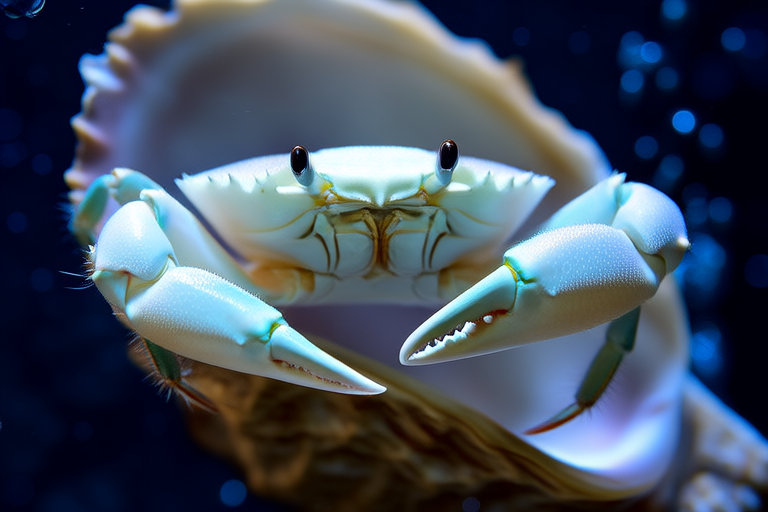
The Pea Crab Phenomenon: Secrets of These Mini Marine Hitchhikers
In the vast and intricate world of marine life, there exists a fascinating group of creatures known as pea crabs. Despite their diminutive size, these crabs play a significant role in marine ecosystems through their unique symbiotic relationships. This article delves into the intriguing world of pea crabs, exploring their size, habitat, host associations, lifecycle, mating habits, ecological impacts, and the challenges of studying these mini marine hitchhikers.
Introduction to Pea Crabs
Pea crabs, belonging to the family Pinnotheridae, are small crustaceans that live in the mantle cavities of bivalves and other marine organisms. Their name aptly describes their size, which typically ranges from a few millimeters to about one centimeter in length. These tiny creatures have adapted to live inside their hosts, forming a unique symbiotic relationship that benefits both parties involved. While some pea crabs are commensal, meaning they benefit from the host without affecting it, others can be parasitic, potentially causing harm to their hosts.
Habitat and Host Species
Pea crabs are found in a wide range of marine habitats, from shallow coastal waters to deep-sea environments. They are particularly prevalent in areas rich in bivalve populations, such as oyster beds, mussel reefs, and clam colonies. The specific host species vary depending on geographical location, but common hosts include oysters, scallops, clams, and even sea cucumbers. For instance, the Atlantic Oyster Pea Crab (Pinnixa faba) is often found nestled within the gills of Eastern Oysters, while the Pacific Pea Crab (Pinnixa littoralis) prefers the mantle cavity of various bivalves along the Pacific coast.
The Symbiotic Relationship
The symbiotic relationship between pea crabs and their hosts is a complex and fascinating phenomenon. In most cases, the pea crab provides protection to its host from potential predators by making the host less appealing to larger marine animals. Additionally, the crab may help clean debris from the host’s body, contributing to the overall health of the bivalve. However, the benefits can also extend to the pea crab, which finds a stable environment and a constant food source within the host’s tissues.
Despite the mutual benefits, there are instances where the relationship becomes more parasitic. In some cases, the pea crabs can interfere with the host’s reproductive capabilities or feeding efficiency, leading to reduced growth rates or increased mortality. Understanding the balance between these interactions is crucial for comprehending the ecological dynamics of marine ecosystems.
Lifecycle and Mating Habits
The lifecycle of pea crabs is closely tied to their hosts, beginning with the larvae floating freely in the water column until they find a suitable host. Once settled, the juvenile crabs develop rapidly, reaching maturity within a few months. The mating process of pea crabs is equally interesting, involving complex behaviors that ensure successful reproduction. Male pea crabs often exhibit elaborate courtship rituals to attract females, ensuring that their offspring have the best chance of survival.
Interestingly, female pea crabs carry their eggs internally, providing them with optimal conditions for development. After hatching, the larvae are released into the water, where they must find a new host to continue their lifecycle. This dependency on finding a host early in their lives underscores the importance of understanding the environmental factors that influence host availability.
Ecological Benefits and Impacts
The ecological significance of pea crabs cannot be overstated. As part of the marine ecosystem, they contribute to biodiversity and help maintain the balance within their habitats. By controlling the population of certain parasites or detritus, pea crabs play a vital role in maintaining the health of their hosts and the broader marine environment. Moreover, their presence can serve as an indicator of the overall health of the ecosystem, offering valuable insights into the well-being of marine communities.
However, the impact of pea crabs is not always positive. In some cases, the crabs can disrupt the reproductive processes of their hosts, leading to population declines. Understanding the extent of these effects is crucial for managing marine resources sustainably and ensuring the long-term health of marine ecosystems.
Challenges in Studying Pea Crabs
Studying pea crabs presents several challenges due to their small size and the difficulty in observing their behavior within their hosts. Traditional methods of marine research often overlook these tiny creatures, focusing instead on larger, more visible species. To overcome these challenges, researchers employ advanced techniques such as microscopes, genetic analysis, and behavioral observations to gain insights into the lives of pea crabs.
The complexity of their symbiotic relationships adds another layer of difficulty. Scientists must carefully examine the interactions between the pea crabs and their hosts to understand the nuances of their coexistence. This requires a multidisciplinary approach, combining expertise in marine biology, ecology, and genetics to unravel the mysteries of these mini marine hitchhikers.
Conclusion
The pea crab phenomenon offers a window into the intricate and delicate balance of marine ecosystems. Through their unique symbiotic relationships, these tiny creatures play a crucial role in maintaining the health and diversity of their habitats. Understanding their lifecycle, mating habits, and ecological impacts is essential for the sustainable management of marine resources. Despite the challenges in studying these mini marine hitchhikers, the insights gained provide valuable knowledge that can inform conservation efforts and enhance our appreciation for the wonders of marine life.
