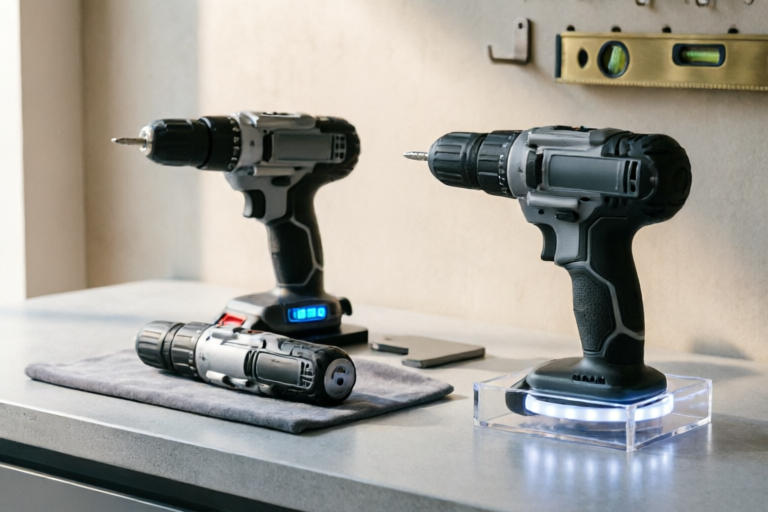
## Introduction to Cordless Drilling
In the realm of home improvement and do-it-yourself (DIY) crafts, few tools have undergone a transformation as dramatic as the cordless drill. Once considered merely as auxiliary equipment for light assembly tasks, modern cordless drills have evolved into powerhouse machines capable of handling heavy-duty construction jobs that were previously the exclusive domain of corded counterparts or industrial-grade machinery. For the enthusiastic homeowner, understanding the nuance behind cordless technology is not just a matter of preference; it is essential for efficient project management and successful outcomes.
Why are cordless drills considered essential for DIY enthusiasts? The primary allure lies in their freedom of movement. Gone are the days when you had to drag extension cords across rooms, worry about tripping hazards, or limit your workspace to the proximity of a power outlet. The portability offered by battery-operated units allows users to move seamlessly from the living room to the backyard deck without interruption. Furthermore, advancements in Lithium-Ion technology have closed the gap between the sustained power of a plug-in tool and the convenience of a cordless one. Today, a high-performance cordless drill can deliver consistent power through complex fastening operations, wood boring, and even light masonry work.
Moreover, the ecosystem surrounding cordless drills often extends beyond the tool itself. Many manufacturers offer a platform approach where batteries are interchangeable among various tools such as circular saws, leaf blowers, and lights. This compatibility reduces clutter in the garage and lowers the long-term cost of ownership. For those embarking on their first major renovation or simply looking to fix loose cabinet hinges, having the right cordless drill equipped with the proper knowledge ensures that every turn of the screwdriver is precise, powerful, and safe. This article serves as a comprehensive guide, diving deep into specifications, reviewing top models, and outlining the critical safety protocols necessary for any workshop environment.
## Key Specifications and Performance Metrics
When browsing the aisles of a home improvement store or scrolling through online marketplaces, the sheer number of options can be overwhelming. To make an informed decision, it is vital to understand the technical specifications that dictate performance. Not all drills are created equal, and matching the tool to the task requires decoding metrics like voltage, torque, motor type, and battery capacity.
### Voltage and Power Platforms
Voltage is perhaps the most frequently cited specification, representing the electrical potential the drill uses. Most entry-level cordless drills operate on 12-volt platforms. These are excellent for light-duty tasks such as assembling furniture, hanging curtains, or driving small screws into drywall. They are lightweight and compact, fitting easily into small bags. However, for more demanding applications like drilling through hardwood or framing, a higher voltage is typically required. The industry standard for mid-range to prosumer work is the 18-volt or 20-volt Max platform. Despite the marketing difference, 18V and 20V are generally interchangeable in terms of power output, utilizing similar battery architectures. High-end users seeking maximum punch for concrete anchors or large diameter holes may opt for 40-volt systems, though these are heavier and less versatile for general home use.
### Torque Settings and Control
Torque measures the rotational force the drill generates. It is critical for controlling how tightly a screw is driven. Most modern cordless drills feature a selectable clutch ring around the chuck. This allows the user to set a specific torque limit. If the resistance exceeds this setting, the clutch slips to prevent stripping the screw head or damaging the material being drilled. For soft materials like pine or plastic, a lower setting is necessary to avoid crushing the surface. For metal bolts or lag screws, a higher setting provides the necessary grip. Understanding the torque chart included in the manual is crucial; it dictates exactly which setting corresponds to specific tasks. Additionally, drills equipped with electronic speed control allow for variable triggers, giving the operator fine-tuned control over RPM (Revolts Per Minute) for precision drilling in delicate materials versus speed drilling in rough lumber.
### Brushless Motors vs. Brushed Motors
The heart of the drill is its electric motor. Traditionally, drills used brushed motors, which rely on carbon brushes contacting a commutator to function. While reliable and cheaper to manufacture, they suffer from friction that leads to heat buildup and energy loss. In recent years, brushless motors have become the gold standard for premium cordless drills. By eliminating the physical contact brushes, these motors run cooler, more efficiently, and last significantly longer. The absence of friction also means better battery life and increased torque output. When shopping for a drill intended for frequent use, investing in a brushless model is highly recommended despite the higher upfront cost, as the durability and efficiency gains pay off over time.
### Battery Life and Capacity
Battery performance is measured in Ampere-hours (Ah). Common capacities range from 1.5Ah to 5.0Ah and beyond. A larger Ah rating indicates a larger battery pack, which holds more energy and lasts longer between charges. However, physically larger batteries add weight to the tool, affecting ergonomics. For overhead work, a lighter 2Ah battery might be preferable, whereas a floor installation project benefits from the endurance of a 5.0Ah pack. Another critical factor is the chemistry. Lithium-Ion (Li-Ion) batteries have largely replaced Nickel Cadmium (NiCd) and Nickel Metal Hydride (NiMH) due to their lack of memory effect and rapid charging capabilities. Fast chargers that can recharge a depleted battery in under 45 minutes are becoming increasingly common and drastically reduce downtime during long projects.
### Chuck Size and Material
The chuck is the mechanism that holds the drill bit. Most drills come with either a 3/8-inch or 1/2-inch keyless chuck. A 1/2-inch chuck offers a wider range of bit sizes and greater stability, especially when using large auger bits or impact drivers. It is ideal for heavy drilling tasks. Conversely, 3/8-inch chucks are found on compact drills designed for tight spaces and lighter loads. The "keyless" feature allows for quick bit changes by hand without needing a separate wrench, saving valuable time. When assessing the build quality, ensure the jaws of the chuck are made of hardened steel and that the locking mechanism feels solid, with no wobble when engaged.
## Top Recommended Models for Different Budgets
Selecting the right tool depends heavily on your financial constraints and the complexity of your planned projects. Below, we categorize top-tier recommendations into budget-friendly, mid-range, and premium segments to guide your purchasing decision.
### Budget-Friendly Options: Entry-Level Essentials
For homeowners who intend to perform occasional repairs, assemble flat-pack furniture, or handle minor household fixes, investing hundreds of dollars in a power tool may seem excessive. Budget-friendly drills bridge this gap effectively.
**The Ryobi One+ Series (18V)**
Ryobi dominates the budget sector with its extensive One+ ecosystem. The P208 cordless drill is a fan favorite for beginners. It offers a respectable 18-volt platform that shares batteries with over 200 other tools in the lineup. With two built-in LED lights to illuminate dark corners and a compact design, it handles most household driling and driving tasks competently. Its price-to-performance ratio is unbeatable. While it may not withstand daily professional abuse, it is robust enough to maintain integrity for a weekend warrior tackling a bedroom remodel or organizing the garage.
**Black+Decker 12-Volt Max**
For those needing absolute simplicity, Black+Decker offers some of the lightest drills available. The BDCD120C is incredibly affordable and easy to maneuver for women or younger DIYers who find heavier tools unwieldy. It features a 2-position gearbox for varying speeds. While limited in torque compared to larger models, it is sufficient for drilling pilot holes in wood, assembling toys, and basic mounting tasks. It represents the perfect starting point for someone hesitant to commit to a full power tool kit.
### Mid-Range Picks: Balanced Performance
If you plan to undertake regular renovations, build decks, or engage in woodworking hobbies, you need a step up from the entry-level. Mid-range drills offer better materials, improved motors, and enhanced ergonomic designs without reaching professional pricing tiers.
**Bosch PS31-2A (12V Max FlexiClick)**
Bosch is renowned for German engineering and precision. The PS31 combines versatility with Bosch’s signature comfort. It utilizes a modular design allowing users to swap heads for a straight angle or a right-angle attachment, increasing its utility in tight cabinetry spaces. The lithium-ion battery supports a wide temperature range, making it suitable for use in cold garages or hot attics. The rubberized handle reduces vibration and improves grip, which is essential during prolonged use. It strikes an ideal balance between power and manageability for the serious hobbyist.
**Craftsman V20 Cordless Drill Combo Kit**
Craftsman brings a classic American reputation to the table with robust build quality. Their V20 drill kits often come with a second drill or impact driver in the box, offering immediate value. These tools typically feature high-compression gearboxes that improve torque transmission. The battery life is commendable for the price bracket, and the inclusion of an aggressive charger ensures minimal wait time. Craftsman tools are widely serviced and backed by strong warranties, providing peace of mind for buyers who want reliability without the premium price tag of pro brands.
### Premium Choices: Professional Grade Reliability
For those who treat tools as investments or require flawless performance for demanding commercial applications, premium models offer the highest levels of durability and technological integration.
**DeWalt DCB205 (20V Max)**
DeWalt is a staple on job sites worldwide. Their 20V Max XR series is synonymous with power and toughness. The DCB205 model features a brushless motor that maximizes runtime and efficiency. The compact design does not sacrifice power; it delivers exceptional torque in a package small enough for ceiling work. Built with fiberglass-reinforced composite housing, it can withstand drops onto concrete floors. DeWalt offers one of the broadest arrays of accessories compatible with this platform, including dedicated bits and adapters. The digital fuel gauge on the battery allows users to track remaining charge precisely.
**Milwaukee M18 Fuel**
Milwaukee has disrupted the market with its REDLITHIUM batteries and proprietary POWERSTATE brushless motors. The M18 Fuel Hammer Drill/Driver stands out for its ability to deliver massive amounts of torque in a small form factor. It often incorporates a REDLINK PLUS intelligence system to prevent overload and damage to the tool during operation. While the initial purchase price is high, the longevity and resale value of Milwaukee tools make them a smart long-term choice. The ergonomics are engineered specifically to reduce operator fatigue, featuring a rear handle grip that shifts weight distribution optimally.
## Safety Guidelines and Proper Usage Techniques
Owning a high-quality drill is only half the battle. Safe operation ensures that you protect yourself and the integrity of your workpiece. Negligence with power tools can lead to severe injury or property damage. Adhering to safety guidelines and proper usage techniques is non-negotiable for any DIY enthusiast.
### Choosing the Right Bits
Using the correct bit is fundamental to safety and efficiency. Mixing up a wood bit with a masonry bit can ruin the bit and the workpiece instantly. For wood, twist bits or spade bits are standard. For metal, use high-speed steel (HSS) bits with sharp geometries to cut rather than grind. When drilling into concrete or brick, masonry bits with carbide tips are mandatory.
Additionally, always inspect your bits before insertion. Look for signs of wear, dull edges, or cracks. A dull bit requires more pressure, which increases the risk of slippage. Ensure the shank of the bit fits the chuck perfectly. Loose bits spin erratically, posing a danger to the operator. Secure the chuck firmly after inserting the bit. Never leave a drill running in a bag with bits loose inside.
### Personal Protective Equipment (PPE)
Your eyes are irreplaceable. Always wear safety glasses or goggles when operating a drill. Chips of wood, metal shavings, or concrete dust can travel at high speeds and cause blindness. For dusty environments, a dust mask or respirator is advisable to protect your lungs from particulate matter. Hearing protection is often overlooked but necessary when using high-powered drills or operating near loud grinding wheels for extended periods. Gloves should be worn when handling materials, but ensure they fit snugly so they do not get caught in rotating parts.
### Maintaining Ergonomic Posture
The human body is not designed for static positions for hours on end. Poor posture during drilling can lead to repetitive strain injuries. Stand with feet shoulder-width apart to maintain stability. When drilling overhead, lock your elbows and brace your arms against your body to control recoil. When drilling horizontally, keep the drill parallel to your shoulders. Do not lean your body weight unnecessarily against the machine; let the tool’s weight do the work.
Furthermore, secure the workpiece. Drilling into free-moving objects causes the drill to grab and spin violently, potentially damaging fingers. Use clamps to hold wood firmly to a bench. If working on a wall, ensure the studs or anchor points are marked and clear of pipes and wires. Use a stud finder to avoid catastrophic accidents behind walls.
### Kickback Prevention
Kickback occurs when the drill bit binds suddenly, causing the tool to jerk out of your hands. This is dangerous. To prevent it, ensure your bit is sharp and not bending. Feed the tool smoothly without forcing it. If you feel increased resistance, stop immediately and withdraw the bit. Check for obstructions or knots in the wood. Never hold the drill in a position where your hands could be hit by the spinning chuck if binding occurs.
### Maintenance for Longevity and Safety
Regular maintenance keeps your drill performing safely. Clean the air vents periodically to prevent overheating. Store batteries at room temperature and never expose them to extreme cold or fire. Keep the chuck clean of debris. If the drill develops unusual noises, sparks, or smells, discontinue use and inspect it or take it to a certified repair center. A poorly maintained tool is a hazard waiting to happen. Regularly check the condition of the casing for cracks that could expose internal wiring.
## Conclusion and Final Buying Advice
Choosing the best cordless drill for your home improvement needs involves balancing power requirements, budget constraints, and future expansion plans. As we have explored, the transition from corded to cordless has empowered homeowners to tackle projects with unprecedented freedom. Whether you are installing shelving, building custom cabinets, or renovating an entire bathroom, the right tool makes the difference between a tedious struggle and a smooth workflow.
To summarize the main points, remember that voltage determines the raw power potential, with 20V being the sweet spot for general-purpose home use. Torque settings and clutch mechanisms provide control to prevent damage to fasteners. The choice between brushed and brushless motors impacts longevity and battery efficiency, with brushless being the superior choice for longevity.
For your purchasing strategy, consider your project scope. If you are a novice, a budget-friendly option from Ryobi or Black+Decker is a low-risk entry point. As you gain confidence and tackle more challenging materials, upgrading to a mid-range or premium model like Bosch or DeWalt will yield better results and reduced frustration. Always factor in the ecosystem of tools you may own; sticking to a single battery platform saves money and simplifies storage.
Finally, never underestimate the importance of safety. Respect the tool, wear your protective gear, and adhere to proper techniques. A cordless drill is a powerful instrument that demands respect. By following this guide, understanding the specifications, and selecting a model that aligns with your needs, you will equip yourself for success in your DIY endeavors. Your home is a canvas for your creativity, and with the best cordless drills in your toolkit, there are no limits to what you can achieve. Happy drilling, and stay safe on your next project.