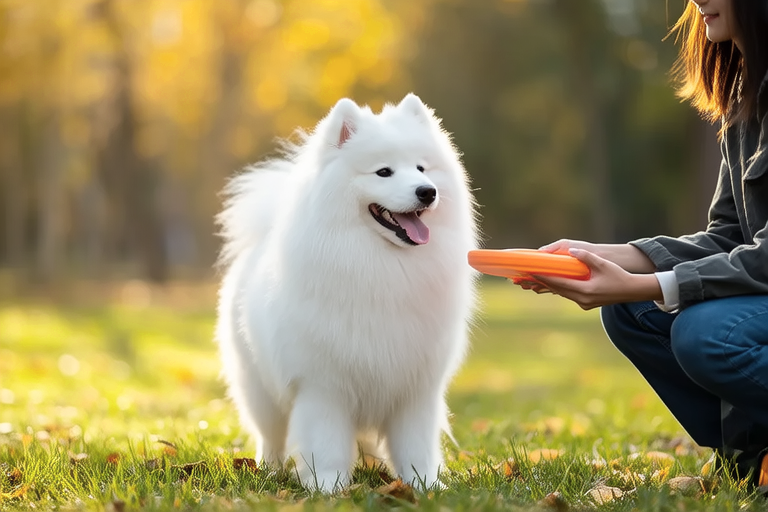
Samoyed Owners Reveal Their Secret to Training the Ultimate Playful Partner
Samoyeds are known for their striking white coats, friendly dispositions, and playful nature. These traits make them excellent companions, but they also come with unique challenges when it comes to training. Experienced Samoyed owners have shared their secrets to training these delightful dogs into well-behaved and playful partners. This article delves into practical training tips, emphasizing playful interaction as a key component of their training.
Building Trust and Establishing Communication
The foundation of any successful dog training program is built on trust and clear communication. Samoyeds are intelligent and can be quite independent, so it’s crucial to establish a strong bond with your dog from the outset. Start by spending quality time with your Samoyed, engaging in activities that promote bonding. This could be simple tasks like grooming or playing fetch.
Effective communication involves consistent commands and body language. Use short, clear commands such as “sit,” “stay,” and “come.” Reinforce these commands with treats and praise. Samoyeds respond well to positive reinforcement, making it easier to build a trusting relationship. It’s important to remain patient and understanding, as consistency is key in establishing clear communication.
Playful Interaction as a Key Component
One of the most effective ways to train a Samoyed is through playful interaction. Samoyeds are highly energetic and love to play, so incorporating games into your training sessions can make learning fun and engaging for both you and your dog.
Fetch is an excellent game for Samoyeds. Not only does it help channel their energy, but it also teaches basic obedience commands like “drop it” and “come.” Another popular game is tug-of-war, which can be used to teach impulse control and the importance of releasing toys on command. Remember to always end the game with your Samoyed releasing the toy, reinforcing the “drop it” command.
Interactive toys, such as puzzle feeders or treat-dispensing balls, can also be beneficial. These toys keep your Samoyed mentally stimulated and engaged, reducing destructive behavior that may arise from boredom. They also provide a way to reward your Samoyed for good behavior without relying solely on treats.
Strategies for Channeling High Energy
Samoyeds are known for their high energy levels, which can sometimes lead to challenging behaviors if not properly channeled. Here are some strategies to help manage and redirect this energy:
- Regular Exercise: Daily walks, runs, and playtime are essential for keeping your Samoyed physically fit and mentally stimulated. Aim for at least two hours of exercise per day.
- Structured Play Sessions: Organized play sessions with other dogs can help burn off excess energy. Just ensure that these interactions are supervised to prevent any aggressive behavior.
- Training Sessions: Incorporate short, frequent training sessions throughout the day. This keeps your Samoyed engaged and helps reinforce commands.
- Chewing Toys: Provide appropriate chew toys to satisfy your Samoyed’s natural urge to chew. This can help prevent destructive chewing on household items.
Common Challenges and Solutions
While Samoyeds are generally friendly and easygoing, there are some common challenges that owners may face during the training process:
Challenge 1: Stubbornness
Samoyeds can be quite independent, which might manifest as stubbornness during training. To overcome this, focus on positive reinforcement and patience. Break down commands into smaller steps and celebrate each small success. Consistency is key, so ensure all family members use the same commands and rewards.
Challenge 2: Barking
Barking is a common issue with many breeds, including Samoyeds. To address this, identify the triggers for your Samoyed’s barking and work on desensitizing them. For example, if your Samoyed barks at strangers, gradually introduce them to people in a controlled environment, rewarding calm behavior. Teach the “quiet” command and use it consistently whenever your Samoyed starts barking unnecessarily.
Challenge 3: Separation Anxiety
Some Samoyeds may develop separation anxiety, leading to destructive behavior or excessive barking when left alone. To combat this, start by leaving your Samoyed alone for short periods and gradually increase the duration. Provide comfort items, such as a favorite blanket or toy, to help ease their anxiety. Consider crate training as a safe space for your Samoyed when you’re away.
Insights from Experienced Samoyed Owners
We reached out to several experienced Samoyed owners to gather their insights on successful training techniques. Here are some of their top tips:
“Consistency is key. Stick to the same commands and routines, and your Samoyed will quickly learn what is expected of them.”
– Sarah, Samoyed owner for 8 years
“Positive reinforcement works wonders. Reward good behavior with treats, praise, and playtime. This builds a strong bond and encourages good behavior.”
– Mark, Samoyed owner for 5 years
“Don’t forget about mental stimulation. Puzzle toys and interactive games are great for keeping your Samoyed’s mind sharp and preventing boredom-related issues.”
– Emily, Samoyed owner for 4 years
Conclusion
Training a Samoyed requires patience, consistency, and a lot of playful interaction. By focusing on building trust, effective communication, and channeling their high energy into positive behaviors, you can turn your Samoyed into the ultimate playful partner. Remember to celebrate each small victory along the way and enjoy the journey of training your loyal and loving companion.
