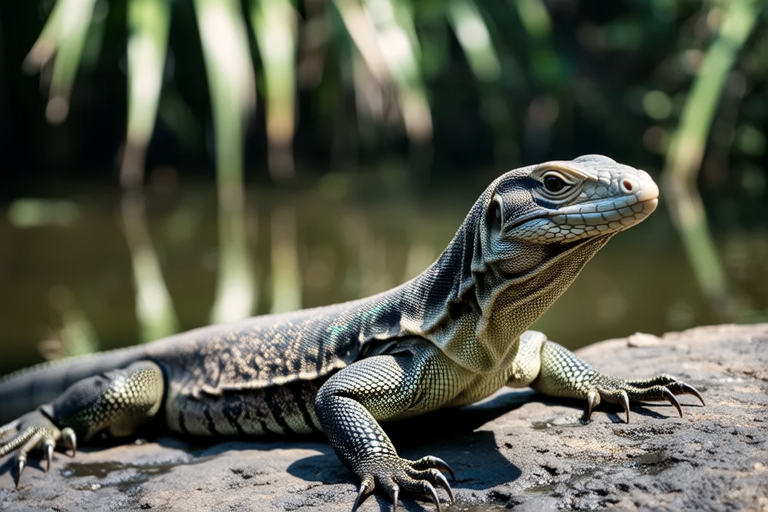
Top 10 Fascinating Facts About the Mesmerizing Water Monitor Lizard
The water monitor lizard (Varanus salvator) is one of the most fascinating creatures on Earth. This large reptile, native to Southeast Asia, has captivated the interest of scientists, wildlife enthusiasts, and cultures for centuries. With its impressive size, remarkable agility, and unique adaptations, the water monitor lizard stands out among other species. Here are ten fascinating facts about this mesmerizing creature.
1. Largest Monitor Lizard
The water monitor lizard is one of the largest monitor lizards in the world, with males reaching lengths of up to 3 meters (9.8 feet) and weighing as much as 50 kilograms (110 pounds). Their elongated bodies, powerful limbs, and sharp claws make them formidable predators. These physical attributes enable them to move swiftly through their environment, both on land and in water. According to the Journal of Herpetology, water monitors are adept swimmers, capable of holding their breath for up to 30 minutes underwater.
2. Versatile Diet
Water monitors are opportunistic feeders, meaning they will eat almost anything they can catch. Their diet consists of fish, amphibians, small mammals, birds, insects, and even carrion. They have strong jaws and teeth designed for gripping and tearing flesh, making them efficient hunters. Studies published in the Zoological Journal of the Linnean Society indicate that their diet varies depending on availability and seasonality, showcasing their adaptability.
3. Exceptional Climbing Skills
Water monitors possess prehensile tails and sharp claws that allow them to climb trees with ease. This ability helps them escape predators, find shelter, and hunt for prey. Their climbing skills also aid in thermoregulation, as they bask in the sun to maintain optimal body temperature. Research from the Journal of Experimental Biology reveals that water monitors can climb vertical surfaces, demonstrating remarkable agility and strength.
4. Highly Intelligent
Water monitors exhibit complex behaviors that suggest high intelligence. They demonstrate problem-solving abilities, memory retention, and social interactions. For example, they can learn to associate certain sounds or actions with food rewards. In a study published in the Animal Cognition journal, researchers found that water monitors could remember the location of hidden food after several days, indicating advanced cognitive functions.
5. Diverse Habitat Range
Native to Southeast Asia, water monitors inhabit a wide range of environments, including tropical forests, mangrove swamps, grasslands, and freshwater habitats such as rivers, lakes, and marshes. Their adaptability allows them to thrive in various conditions, from dense jungles to urban areas. The Biological Conservation journal reports that water monitors have been spotted in cities like Bangkok, where they navigate through sewers and garbage dumps in search of food.
6. Unique Physical Adaptations
Water monitors have several unique physical features that contribute to their success as predators. Their forked tongues enable them to detect chemical signals in the air, similar to snakes. This adaptation helps them locate prey and navigate their surroundings. Additionally, their keen eyesight and sense of smell allow them to detect movement and scent trails over long distances. The Journal of Comparative Physiology A highlights these sensory capabilities, emphasizing the lizard’s exceptional hunting prowess.
7. Cultural Significance
In many Asian cultures, water monitors hold significant cultural importance. They are often featured in folklore, art, and mythology. For instance, in Vietnamese legend, the water monitor is associated with the god Long, symbolizing power and protection. In some regions, water monitors are considered symbols of good luck and prosperity, while in others, they are feared due to their aggressive nature. The Journal of Ethnobiology and Ethnomedicine explores the diverse cultural perceptions of water monitors across different societies.
8. Mating and Reproduction
Water monitors reach sexual maturity between three and five years of age. Males engage in ritualized combat during the breeding season to establish dominance and mate with females. After mating, females lay clutches of 10 to 50 eggs in nests made of vegetation or soil. Incubation lasts approximately six months, and hatchlings emerge fully developed. Research from the Herpetological Review provides insight into the reproductive strategies of water monitors, highlighting the challenges they face in ensuring the survival of their offspring.
9. Threats and Conservation
Despite their widespread distribution, water monitors face numerous threats, including habitat destruction, illegal pet trade, and hunting for their meat and skin. Overexploitation has led to population declines in some areas, prompting conservation efforts. Organizations such as the International Union for Conservation of Nature (IUCN) work to protect water monitors and their habitats. Efforts include establishing protected areas, promoting sustainable practices, and raising awareness about the importance of preserving these remarkable animals.
10. Mesmerizing Behavior
One of the most mesmerizing aspects of water monitors is their behavior. They are highly active, curious, and engaging creatures. Observing their movements, interactions, and hunting techniques can be both thrilling and educational. Their ability to blend into their surroundings, combined with their striking appearance, makes them a popular subject for wildlife photography and documentaries. The Wildlife Conservation Society encourages responsible observation and documentation of water monitors, fostering appreciation for these captivating reptiles.
In conclusion, the water monitor lizard is a truly mesmerizing creature with many unique qualities. From its impressive size and versatile diet to its exceptional climbing skills and cultural significance, this remarkable animal continues to fascinate and inspire. By understanding and appreciating the water monitor lizard, we can better protect and conserve these magnificent creatures for future generations.
