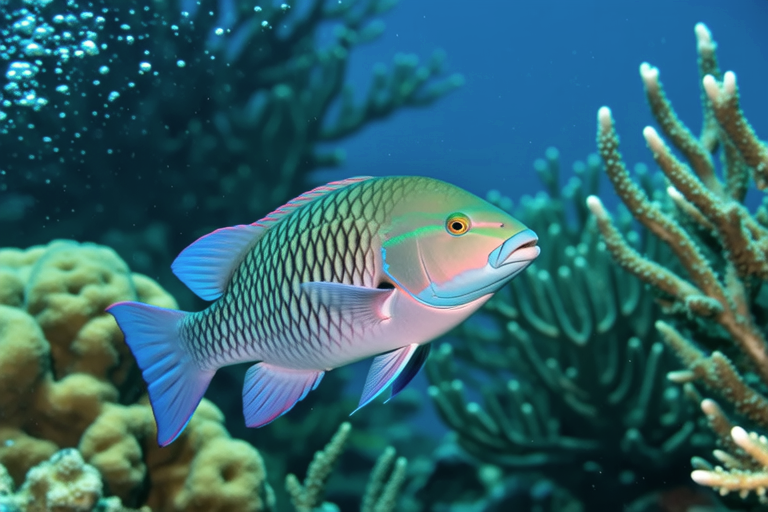
Parrot Fish: Nature’s Most Vibrant Underwater Artists
In the dazzling underwater world of coral reefs, one creature stands out like a living rainbow – the parrot fish. These enchanting marine creatures are not just visually stunning with their vibrant colors and unique appearance; they also play a crucial role in maintaining the health of coral reef ecosystems. From their remarkable sleeping habits to their complex reproductive behaviors, parrot fish are truly nature’s most vibrant underwater artists.
The Vivid Palette of Parrot Fish
Parrot fish come in a mesmerizing array of colors, ranging from electric blues and greens to fiery oranges and pinks. Their bodies are often adorned with intricate patterns that seem almost too bright for the ocean depths. The males, in particular, sport some of the most striking hues, while females tend to have more subdued tones. This color variation serves multiple purposes, from attracting mates to camouflaging themselves among the reef during daytime. Their unique appearance is further accentuated by their beak-like mouths, which they use to scrape algae off coral rocks.
Guardians of the Coral Reefs
Parrot fish are vital contributors to the health of coral reefs. Through their feeding habits, they help maintain the delicate balance of these ecosystems. By grazing on algae, they prevent it from overgrowing and smothering corals, ensuring that sunlight can reach the photosynthetic organisms within the coral. Additionally, their digestive process breaks down calcium carbonate, which is then excreted as sand. This contributes significantly to the formation of beaches and islands in tropical regions.
Nocturnal Wonders and Sleeping Cocoon
At night, parrot fish undergo a fascinating transformation. They secrete a thin layer of mucus around their bodies, creating a protective cocoon that acts as a barrier against parasites and predators. This behavior, while common among many fish species, is particularly intriguing in parrot fish due to their vibrant colors, which could otherwise make them easy targets. During the night, they become more active, exploring the reef for food in a nocturnal dance of survival.
Mating Rituals and Life Cycle
The reproductive behavior of parrot fish is equally fascinating. Males typically establish territories where they perform elaborate courtship displays to attract females. Once mating occurs, the female releases her eggs into the water, where they are fertilized by the male. Depending on the species, the eggs may be guarded by the male or left to float freely. After hatching, the larvae drift in the open sea before settling on a reef, beginning their journey toward adulthood.
Some species of parrot fish exhibit protogynous hermaphroditism, meaning they start life as females and later transition into males. This unique adaptation ensures genetic diversity within populations. As they mature, certain environmental cues trigger the change, leading to the development of secondary sexual characteristics such as brighter colors and larger size.
The Importance of Marine Conservation
Despite their importance to marine ecosystems, parrot fish face numerous threats, including overfishing and habitat destruction. Protecting marine environments is essential not only for preserving these colorful underwater artists but also for maintaining the overall health of our oceans. By supporting sustainable fishing practices and marine protected areas, we can ensure that future generations will continue to marvel at the beauty and complexity of parrot fish and the ecosystems they inhabit.
As we delve deeper into the mysteries of the ocean, let us remember the vital role played by creatures like the parrot fish. Their vibrant presence serves as a reminder of the delicate balance that exists within marine ecosystems and the need for conservation efforts to safeguard this precious biodiversity.
